
Key facts: Heat Pump Repair
- A heat pump moves heat rather than generating it, cooling in summer and heating in winter [1].
- Winters in Washington are cool to cold, with periodic freezes and snow [2].
- In cold weather, heat pumps periodically run a defrost cycle to clear frost from the outdoor coil.
- Ductless mini-split heat pumps are common in renovated rowhouses and condos [3].
- Many heat pumps have electric backup heat for very cold periods or defrost.
The basics
How a heat pump works
A heat pump is an air conditioner that can run in reverse. In summer, it pulls heat out of your home and releases it outside, just like a standard AC. In winter, a reversing valve switches the flow of refrigerant so the outdoor coil absorbs heat from outside air, even cold air, and the indoor coil releases it into your home. Because it moves heat rather than burning fuel or using resistance heat, a heat pump can deliver more heat energy than the electricity it uses.
In DC, heat pumps appear as ducted systems with an outdoor unit and indoor air handler, as ductless mini-splits with wall-mounted heads, and as packaged units in some condo buildings. Older homes sometimes pair a heat pump with a gas furnace as a dual-fuel system.
Problems
Common heat pump problems
Not cooling or not heating
Low refrigerant, failed capacitor, reversing valve or controls.
Ice on the outdoor unit
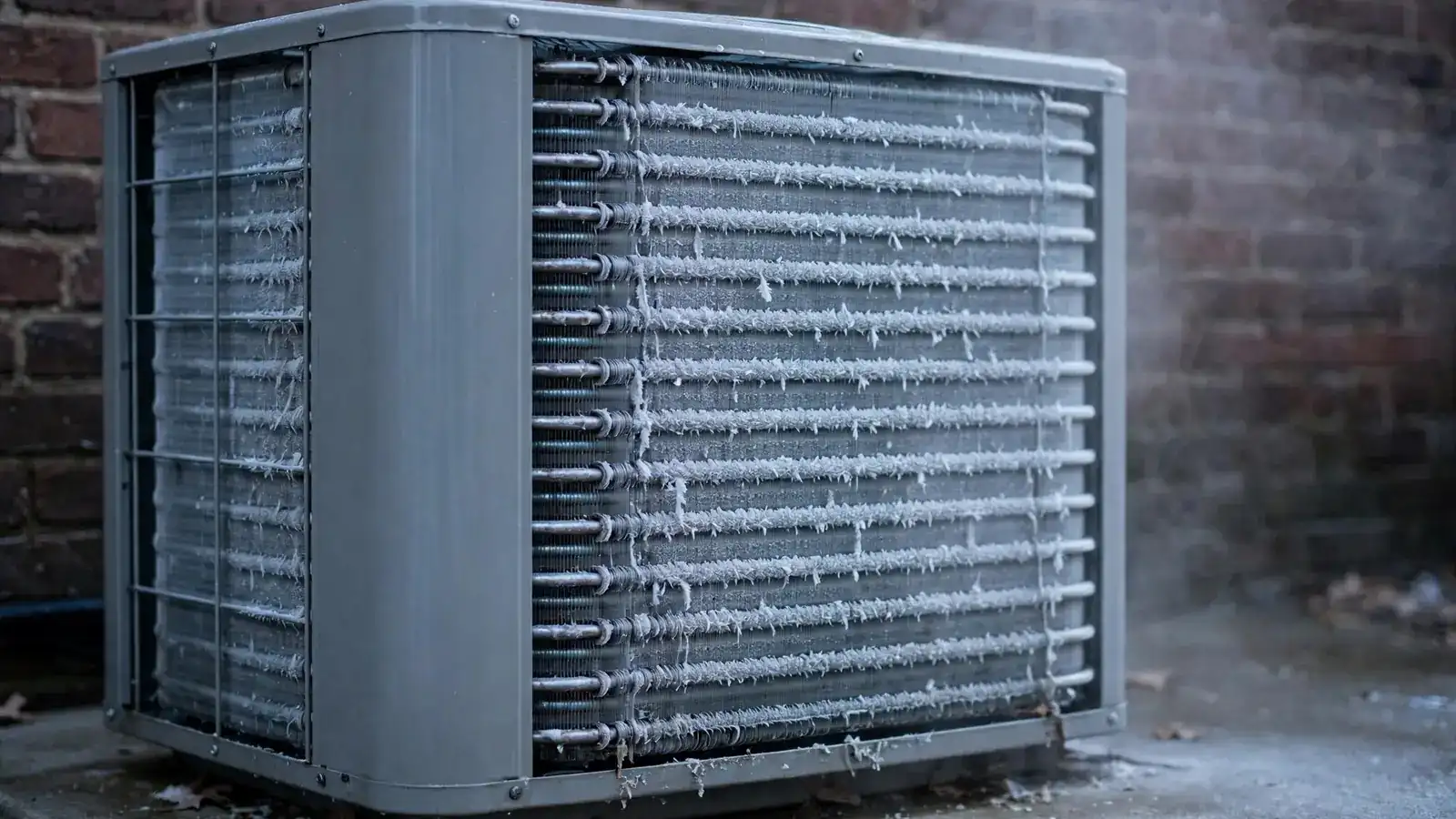
Some frost is normal in winter; heavy ice is not.
Blowing cool air in heat mode
Defrost cycle, low charge or backup heat issue.
Running constantly in winter
Very cold weather, low charge or undersizing.
Loud whoosh or hiss
Often a normal defrost cycle switching.
High winter electric use
Backup heat running more than it should.
Defrost
Defrost cycles explained
When outdoor air is cold and damp, frost forms on the heat pump's outdoor coil. To clear it, the system briefly switches to cooling mode, sending hot refrigerant to the outdoor coil, while the outdoor fan stops. You may hear a whoosh, see steam rising from the unit and feel cooler air indoors for a few minutes. Many systems turn on backup heat during defrost to keep indoor air warm. This is normal.
Problems arise when defrost does not happen or does not finish. A failed defrost sensor, control board, reversing valve or low refrigerant can leave the coil encased in ice, which blocks airflow and stops heating. Heavy ice that does not clear within a few hours needs attention.
What to expect
Normal or not?
| What you notice | Usually normal? | When to call |
|---|---|---|
| Light frost on outdoor coil in winter | Yes | If it becomes thick ice |
| Steam from the unit | Yes, during defrost | If constant |
| Whoosh sound when switching | Yes | If loud banging |
| Air feels lukewarm compared with a furnace | Often | If the house will not warm up |
| Backup heat light on | In very cold weather | If on most of the time |
| Unit encased in ice | No | Call |
The visit
What a heat pump service visit covers
- 1
Check both modes
Cooling and heating operation.
- 2
Test the reversing valve
Confirm it switches properly.
- 3
Check defrost controls
Sensors, board and timing.
- 4
Measure refrigerant
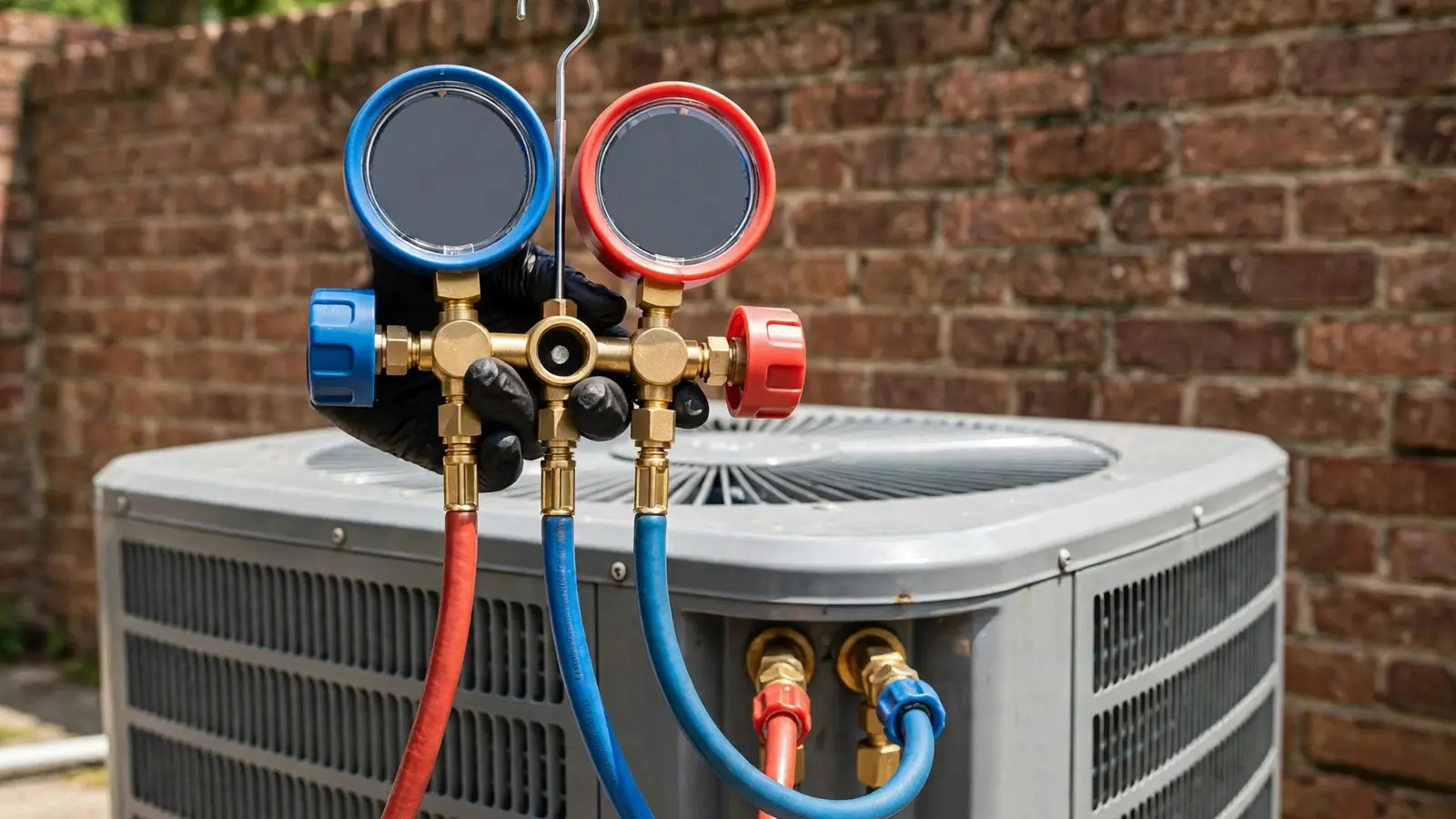
Pressures and temperatures in each mode.
- 5
Inspect electrical parts
Capacitor, contactor, wiring.
- 6
Check backup heat
Elements, sequencers and thermostat staging.
Climate
Heat pumps in DC's climate
Washington has hot, humid summers and cool to cold winters, with occasional cold snaps and snow. Modern heat pumps, including cold-climate models, handle DC winters well. Older heat pumps lose capacity as temperatures drop and lean more on backup electric heat. Because heat pumps run in both seasons, they accumulate more operating hours than an air conditioner alone, so maintenance twice a year makes sense.
Mini-splits
Mini-split heat pumps in rowhouses
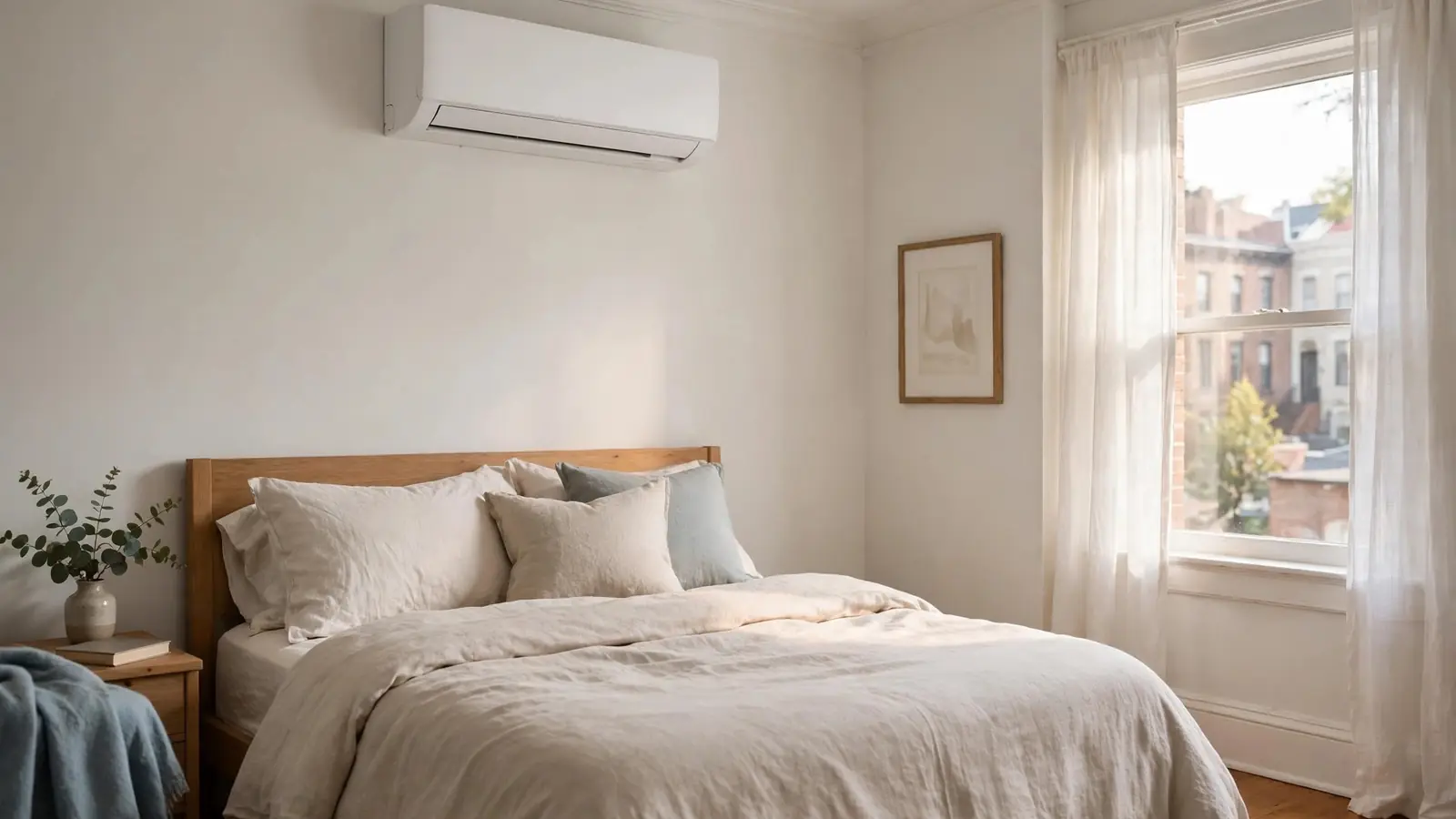
Ductless mini-splits suit rowhouses and condos where adding ducts would mean opening plaster walls and ceilings. A single outdoor unit can serve several indoor heads. They heat and cool efficiently, and each room can be controlled separately.
Common problems include dirty indoor filters, clogged condensate lines, flare joint leaks, error codes from sensors or boards, and outdoor units buried in snow. Indoor filters should be cleaned regularly, often monthly in heavy use.
- Clean indoor filters often
- Keep drains clear
- Watch for error codes
- Keep outdoor unit above snow
Backup heat
Backup and emergency heat
Many ducted heat pumps have electric resistance strips in the air handler. They turn on automatically during defrost or when the heat pump cannot keep up on very cold days. Thermostats often have an emergency heat setting that uses only the backup strips. Emergency heat works but uses much more electricity, so it is best kept for when the heat pump has failed. If your backup heat seems to run most of the time in mild weather, the heat pump may have a problem.
Reversing valve
The reversing valve
The reversing valve is the part that makes a heat pump a heat pump. Controlled by the thermostat through a solenoid, it shifts the direction of refrigerant flow between heating and cooling. If the solenoid coil fails, the valve sticks, or internal parts leak, the system may be stuck in one mode, heat poorly or cool poorly. Technicians test the solenoid, measure temperatures on the valve's lines and check refrigerant pressures in both modes. Replacing a reversing valve means recovering refrigerant and brazing, so it is a substantial repair.
Controls
Thermostats for heat pumps
Heat pumps need thermostats set up for heat pump operation, with control of the reversing valve, auxiliary heat and emergency heat. A thermostat replaced with the wrong model or wired incorrectly can cause the system to heat when it should cool, run backup heat too often or never use it. Smart thermostats can work well with heat pumps when configured correctly. If problems started after a thermostat change, mention it to the technician.
By season
Summer and winter problems compared
| Season | Common issue | Likely cause |
|---|---|---|
| Summer | Warm air from vents | Low charge, capacitor, reversing valve stuck in heat |
| Summer | Ice on indoor coil | Low airflow or low charge |
| Winter | Heavy ice outdoors | Defrost failure, low charge, poor drainage |
| Winter | Cool air indoors | Backup heat failure, reversing valve, low charge |
| Winter | High electric use | Backup heat running too often |
| Both | Short cycling | Oversizing, thermostat, refrigerant issues |
Placement
Snow, ice and outdoor placement
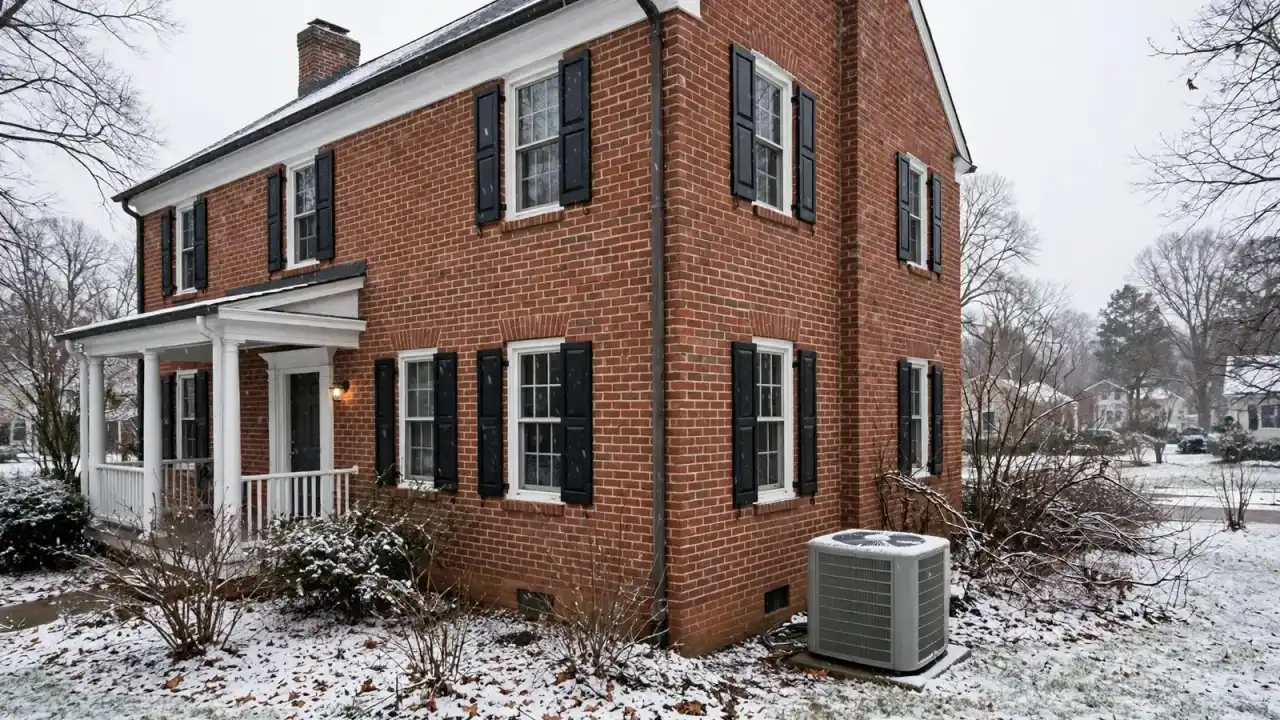
In DC, heavy snow is not frequent, but winter storms do happen. Outdoor units should sit on a pad or brackets high enough to stay above typical snow depth and let meltwater drain away from the coil during defrost. Units under roof edges without gutters can be coated by dripping water that refreezes. Rooftop heat pumps on rowhouses may need clearing after snow. Keep the top and sides free of snow and debris so air can move.
Before you call
Checks before calling about a heat pump
- 1
Thermostat mode
Heat, cool or auto, and the right setpoint.
- 2
Filter
A dirty filter hurts both heating and cooling.
- 3
Outdoor unit
Running? Covered in ice or snow?
- 4
Breakers
Heat pumps with backup heat may have more than one.
- 5
Emergency heat
If the house is cold, switch to it until help arrives.
Dual fuel
Dual-fuel systems
Some DC homes, especially detached houses in upper Northwest, pair a heat pump with a gas furnace. The heat pump handles cooling and moderate heating, and the furnace takes over when it is very cold. Problems can involve either half or the controls that switch between them. A technician checks the changeover temperature setting, the furnace and the heat pump. Gas furnace work involves combustion safety checks and carbon monoxide testing.
Trends
Why more DC homes have heat pumps
Heat pumps have become more common in Washington as older oil and gas systems are replaced, as rowhouses are renovated and as the District pursues building electrification and climate goals. The DC Department of Energy and Environment promotes efficient electric heating and cooling, and federal and local incentive programs have encouraged heat pump installations. Many newer condo buildings use heat pumps in every unit. With more heat pumps in service, more homeowners are learning how they behave in winter.
Drainage
Heat pump water and drainage
In cooling mode, the indoor coil removes moisture that drains away through the condensate line, just like an air conditioner. In heating mode, the outdoor coil sheds water during defrost, which needs to drain away from the unit. Indoor drain problems cause leaks and shutdowns in summer; outdoor drainage problems cause ice buildup in winter. Technicians check both. Mini-split indoor heads have their own drain lines, which can clog and drip down walls.
Maintenance
Heat pump maintenance checklist
- FiltersChange or clean regularly; mini-split filters often monthly in heavy use.
- Outdoor coilClean and straight fins for good airflow.
- DrainsIndoor condensate lines clear.
- RefrigerantPressures checked in both modes.
- ElectricalCapacitor, contactor and connections tested.
- DefrostSensor and controls checked before winter.
- Backup heatElements and staging checked.
- PlacementUnit level and above snow line.
Repair or replace
Older heat pumps and repair decisions
Heat pumps that are fifteen or more years old, use R-22, or need a compressor or reversing valve may be candidates for replacement rather than repair. Newer heat pumps are much more efficient and often work better in cold weather. A technician can lay out the repair and replacement options; the choice is yours. If you replace, ask about cold-climate models and whether a ductless system might suit rooms that were never comfortable.
Condos
Heat pumps in condo buildings
Many DC condo and apartment buildings, including mid-century buildings that were renovated and newer buildings along the waterfront and in NoMa, use individual heat pumps. Some are split systems with condensers on the roof or balconies; others are water-source heat pumps in closets, connected to a building water loop with a central cooling tower and boiler. Water-source units have their own issues: clogged strainers, valve problems and loop temperature. In those buildings, the unit owner usually maintains the heat pump, while the building maintains the loop. Building management can tell you which contractors are approved to work on site.
Through-wall units
Packaged terminal heat pumps
Older apartment buildings and some converted rowhouse units use through-wall packaged terminal heat pumps (PTHPs), the self-contained units found under windows in many hotels. These combine all components in one box. Problems often involve dirty filters, failed fans, control boards or refrigerant leaks. Because they are self-contained, repairs are sometimes simpler, and replacements often slide into the existing wall sleeve.
Winter steps
If your heat pump stops heating in winter
- 1
Check the thermostat
Heat mode and setpoint above room temperature.
- 2
Check breakers
Including any for backup heat.
- 3
Look at the outdoor unit
Running, iced or buried in snow?
- 4
Switch to emergency heat
If the house is getting cold.
- 5
Keep warm safely
Use space heaters carefully, away from anything that can burn.
- 6
Call for service
Describe what you see outdoors and indoors.
Comfort
Comfort tips for heat pump owners
Heat pumps work best with steady settings. Large setbacks at night can make the system call for backup heat in the morning to recover quickly, which uses more electricity. Many owners find a constant setting or small setbacks more comfortable and efficient. Keep supply and return vents clear, close blinds on hot summer afternoons and open them on sunny winter days. In rowhouses, the top floor may need extra attention in both seasons.
Sounds
Noise from heat pumps
Heat pumps make some sounds that air conditioners do not: the whoosh of the reversing valve during defrost, a brief pause of the outdoor fan, and sometimes a gurgle as refrigerant changes direction. Loud banging, grinding, screeching or constant rattling are not normal and point to loose parts, worn fan motors or compressor trouble. On rowhouse roofs, vibration can travel into the house; vibration pads and secure mounting help.
Types
Heat pump types in DC homes
| Type | Where | Notes |
|---|---|---|
| Ducted split | Detached homes, larger rowhouses | Outdoor unit plus indoor air handler |
| Ductless mini-split | Rowhouses, condos, additions | Room-by-room control |
| Water-source | Some condo buildings | Connected to a building loop |
| Through-wall PTHP | Older apartments | Self-contained under windows |
| Dual fuel | Upper Northwest detached homes | Heat pump with gas furnace |
Renters
Renters with heat pumps
In DC rentals, landlords are generally responsible for keeping heating and cooling equipment they provide in working order. If a heat pump fails, notify your landlord in writing, describe the problem and keep a record. In winter, loss of heat is a serious matter; DC has rules on minimum heat in rental housing. Tenants can usually change or clean filters if the lease allows, but repairs belong to the landlord's technician.
Choosing help
Choosing a heat pump technician
Heat pumps combine refrigeration, electrical controls and, sometimes, gas furnaces. Look for technicians with heat pump experience, EPA Section 608 certification and a DC license through the Department of Licensing and Consumer Protection. For mini-splits, ask whether they work on your brand of system, since diagnostic codes and parts vary. For newer systems using A2L refrigerants, ask about their training. A good technician checks both heating and cooling modes, not just the one you called about.
Early signs
Signs your heat pump needs attention soon
Small changes often come before a breakdown: longer run times than last season, rooms that take longer to warm or cool, more frequent backup heat, ice that lingers longer than usual, new noises or rising electricity use with no change in habits. Catching these early, before the coldest or hottest week of the year, usually means a simpler repair.
FAQ
Heat pump questions
Is ice on my heat pump normal?
Light frost is. Heavy ice that does not clear within a few hours is not.
Why is steam coming from my heat pump?
Usually a normal defrost cycle.
Why does heat pump air feel cooler than a furnace?
Heat pumps deliver steady, moderately warm air. If the house warms, it is working.
When should I use emergency heat?
When the heat pump has failed and the house is cold, until it is repaired.
Do heat pumps work in DC winters?
Yes. Modern models handle DC winters well, with backup heat for cold snaps.
Can a heat pump leak refrigerant?
Yes, like any AC. A leak affects heating and cooling.
How often should a heat pump be serviced?
Ideally twice a year, before summer and before winter.
Why is my heat pump running all the time in winter?
In very cold weather that can be normal; otherwise it may be low on charge.
Can I clear snow from my heat pump?
Gently clear snow from around and on top. Do not chip ice.
Do mini-splits need maintenance?
Yes. Clean filters often and have drains and coils checked.
What does the reversing valve do?
It switches refrigerant flow so the heat pump can heat or cool.
Why did problems start after I changed my thermostat?
Heat pumps need correctly configured thermostats; wiring or settings may be wrong.
What is a dual-fuel system?
A heat pump paired with a gas furnace that takes over in very cold weather.
Why does my mini-split drip water down the wall?
The indoor head's drain line may be clogged or the unit not level.
Are heat pumps common in DC condos?
Yes. Many newer buildings use individual heat pumps in each unit.
What is a water-source heat pump?
A heat pump connected to a building water loop instead of an outdoor unit, common in some condo buildings.
Can through-wall units be repaired?
Often, though some are replaced with a new unit in the same wall sleeve.
Why does my heat pump make a whooshing sound?
Usually the reversing valve during a defrost cycle, which is normal.
Should I turn my heat pump down a lot at night?
Big setbacks can trigger backup heat in the morning. Small or no setbacks often work better.
Can any HVAC technician fix a mini-split?
Many can, but brands differ in codes and parts. Ask about experience with your system.
Should a heat pump be checked in both modes?
Yes. Checking heating and cooling catches problems early.
Do heat pumps dehumidify in summer?
Yes, in cooling mode, just like an air conditioner.
Does a heat pump need different filters from an AC?
Usually the same type. Change or clean them regularly year-round.