

Key facts: Georgetown
- Georgetown was founded in 1751 as a Maryland port town, before the District of Columbia was created [1].
- Exterior changes visible from public space in Georgetown are reviewed under the Old Georgetown Act by the Commission of Fine Arts [2].
- Many homes are federal and Victorian rowhouses with thick masonry walls and plaster interiors.
- Ductless and small-duct systems are common ways to cool homes without major alterations.
- The covered ZIP code for Georgetown on this line is 20007.
Coverage
Georgetown ZIP codes served
Calls from these Georgetown ZIP codes can reach an independent HVAC technician who works there.
- 20007Georgetown, Burleith, Glover Park edges and the streets around Georgetown University.
About Georgetown
A town older than the capital
Georgetown was laid out in 1751 on the Potomac as a tobacco port in the colony of Maryland. When the federal city was created in the 1790s, Georgetown became part of the District, but it kept its own street grid and character. Its housing ranges from eighteenth-century federal houses and grand mansions to rows of modest nineteenth-century brick and frame homes, many restored in the twentieth century.
In 1950, Congress passed the Old Georgetown Act, which requires review of exterior changes visible from public space. The Commission of Fine Arts, through its Old Georgetown Board, reviews designs, and that review extends to items such as rooftop equipment, exterior line sets and new openings.
Systems
How Georgetown homes are usually cooled
Hidden rooftop condensers
Placed behind parapets or at the rear, out of view.
Rear-yard units
In gardens, screened by walls or plantings.
Basement or attic air handlers
With ducts in closets and chases.
Room-by-room ductless heads
Wall or ceiling cassettes in individual rooms.
Narrow-tube high-velocity cooling
Small tubes threaded through old walls.
Window units
Still found, though often discouraged on street fronts.
Old construction
Fitting cooling into old masonry houses
Georgetown's oldest houses have thick brick walls, plaster on lath, deep window reveals and limited closet space. Running full-size ducts often means building chases or soffits that change the character of rooms. For this reason, many owners choose high-velocity systems with small flexible tubes, or ductless mini-splits with discreet ceiling cassettes or wall heads in rear rooms. Air handlers often go in basements, which in older houses may be low and damp, or in small attic spaces under the roof.
Problems
Common Georgetown AC problems
| Problem | Likely cause | Usual approach |
|---|---|---|
| Rooms far from the air handler stay warm | Long or small ducts | Balance, add returns or mini-split |
| Damp basement air handler | Humidity and poor drainage | Clear drains, add dehumidification |
| Mini-split error codes | Sensors, leaks or drains | Diagnose and repair |
| Refrigerant leak in hidden line | Old joints in chases | Pressure test and repair or reroute |
| Noisy high-velocity outlets | Airflow setting or outlet placement | Adjust and balance |
| Rooftop unit overheating | Hidden location with poor airflow | Clean coil, improve clearance |
Before you call
First checks before calling
- 1
Thermostat or remote
Mode and setpoint; mini-split remotes too.
- 2
Filters
At the air handler and in each mini-split head.
- 3
Breakers
Indoor and outdoor units.
- 4
Outdoor unit
Running, clear of leaves, not blocked by plants.
- 5
Water
Around basement units or dripping from heads.
- 6
Error codes
Note any blinking lights on mini-splits.
Gardens
Rear gardens and courtyards
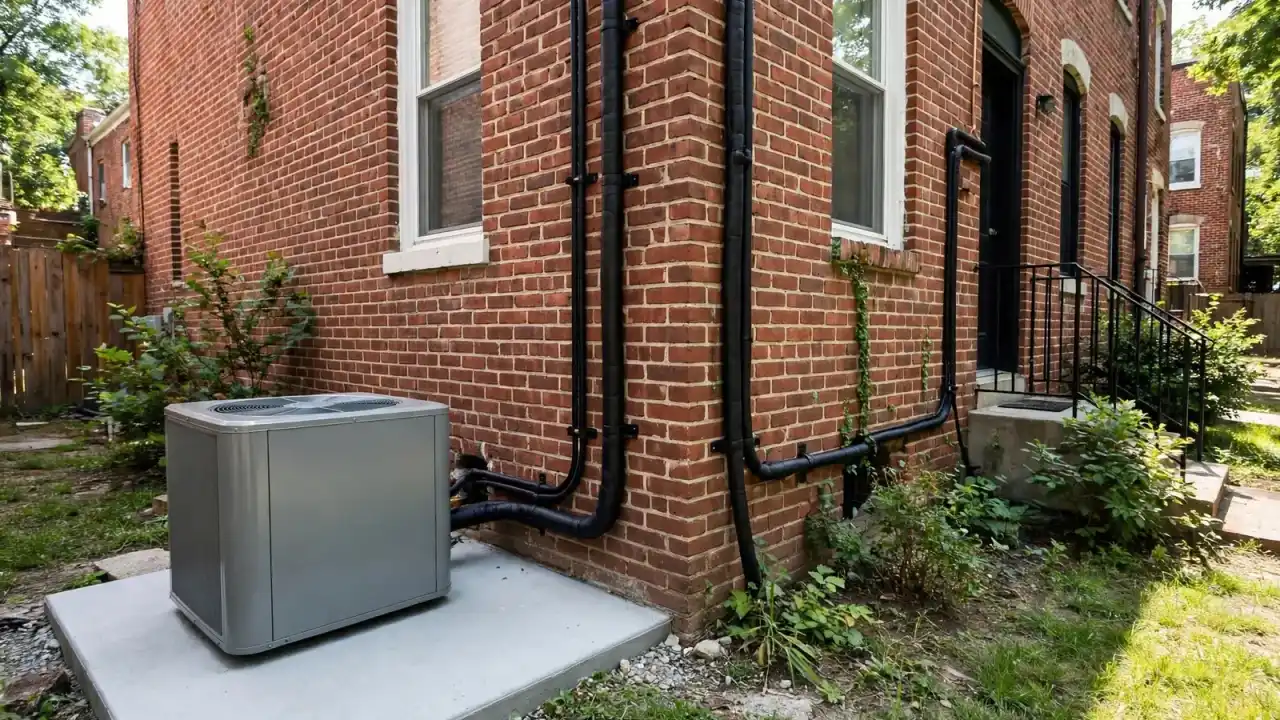
Many Georgetown houses have small rear gardens enclosed by brick walls, which are natural places for condensers because they are hidden from the street. Gardens bring their own issues: leaves, flowers and seeds clog coils, plantings crowd units and irrigation can splash electrical parts.
Keep at least a couple of feet clear around the unit and trim plantings back. A low screen that allows airflow can hide a unit without choking it.
- Hidden from the street
- Leaves and seeds clog coils
- Keep plantings back
- Screens must allow airflow
Mini-splits
Mini-splits in historic houses
Ductless mini-splits let owners cool individual rooms without running ducts through plaster. In Georgetown, ceiling cassettes or concealed ducted mini-split units in closets are often preferred over wall heads in formal rooms. Each indoor unit needs a line set and a drain, which can be routed through closets or floors. Outdoor units go in hidden locations. Maintenance includes cleaning filters often and keeping drains clear.
Rentals
Georgetown University and student rentals
Streets around Georgetown University and in Burleith hold many student and faculty rentals. Rental rowhouses may have older systems, window units or mini-splits added by owners. Tenants should report cooling problems to landlords in writing; landlords arrange repairs to the equipment they provide.

Moisture
Humidity, plaster and old basements
Georgetown sits along the Potomac and the C&O Canal, and summer humidity is high. Old masonry and plaster absorb and release moisture, and basements in the oldest houses can be damp. An air conditioner that cools without removing enough moisture leaves rooms clammy and can encourage mold on cool surfaces. Correct sizing, longer run times with variable-speed equipment and, in basements, a dedicated dehumidifier help. Air handlers in damp basements need well-maintained drains and pans, and their cabinets can rust over time.
High-velocity
High-velocity systems explained
Small-duct high-velocity systems push air through flexible tubes about two inches in diameter, small enough to fish through walls and floors of old houses with little damage. Air exits through small round outlets, often placed in ceilings or floors near walls. Because air moves fast, these systems remove humidity well. They need careful design and balancing: outlets placed too close to seating can feel drafty, and poorly balanced systems can hiss. Repairs involve the same outdoor unit and refrigerant work as standard systems, plus checking the air handler and tubing for leaks or kinks.
Options
System choices for Georgetown houses
| Approach | Strengths | Trade-offs |
|---|---|---|
| Conventional ducts | Familiar, central filtration | Needs chases and soffits |
| High-velocity small ducts | Minimal disruption, good dehumidifying | Careful design and balancing |
| Ceiling-cassette mini-splits | Discreet, room control | Line sets and drains to each |
| Wall-mounted mini-splits | Simple installation | Visible heads in rooms |
| Concealed ducted mini-splits | Hidden units, short duct runs | Need closet or soffit space |
Access
Access in tight houses
Many Georgetown houses have narrow stairs, small closets and low attic hatches. Getting an air handler or replacement coil into a tight attic or basement can be the hardest part of a repair. Technicians may need to take equipment apart to fit it through openings. Roof access is often through small hatches behind parapets. Let the technician know about stairs, hatches and any fragile finishes along the route, and clear a path before the visit.
Protection
Protecting historic interiors during work
- Floor protectionRunners on old floors and stairs.
- Dust controlPlastic sheeting around work areas.
- Careful openingsSmall, neat holes for lines and drains.
- Plaster repair planAgree who repairs any openings.
- Furniture movedClear paths in advance.
Larger homes
Large houses and multiple systems
Georgetown also has large detached and semi-detached houses, particularly on the hill above M Street and toward Dumbarton Oaks. These often have two or three systems serving different floors or wings, sometimes a mix of conventional ducts, high-velocity and mini-splits added over decades. Diagnosing comfort problems in these homes means understanding which system serves which rooms. A floor plan sketch marking thermostats, air handlers and outdoor units helps technicians and future owners.
Low-lying streets
Waterfront and the C&O Canal
Streets near the waterfront and the C&O Canal sit lower and closer to the river. Basements there can be damp, and some have experienced flooding. Air handlers and condensate pumps in these basements should sit above any likely water and have reliable drainage. After heavy rain, check basement equipment for water and listen for condensate pumps running normally.
Replacement
What to expect when replacing a Georgetown system
- 1
Measure the house and its heat load
Including thick walls and window exposure.
- 2
Choose system type
Conventional, high-velocity or mini-split.
- 3
Plan hidden placement
Outdoor units and lines out of public view.
- 4
Check review needs
Old Georgetown Board if anything visible changes.
- 5
Permits
DC mechanical permit through the Department of Buildings.
- 6
Install with care
Protect floors, plaster and woodwork.
Summary
Georgetown AC at a glance
| Topic | What to know |
|---|---|
| Typical homes | Federal and Victorian rowhouses, large detached houses |
| Systems | Hidden condensers, high-velocity, mini-splits |
| Review | Old Georgetown Act for visible exterior changes |
| Common issues | Airflow in hidden spots, damp basements, long ducts |
| Access | Tight stairs, hatches and closets |
Older systems
Older equipment and refrigerant
Systems installed during restorations in the 1980s and 1990s may still be running on R-22. Because R-22 is no longer produced for servicing, leak repairs on these systems depend on reclaimed supplies. When a major component fails, owners often weigh repair against replacement with a modern heat pump or variable-speed system, which can also improve humidity control in old houses.
Climate
Summer in a historic town
Georgetown's narrow streets and brick walls trap heat, and the river adds humidity. Houses with thick masonry walls stay cool longer in the morning but release stored heat into the evening, so air conditioners keep running after sunset. Top floors under slate or metal roofs warm quickly. Windows in old houses are often single-glazed and leaky, adding heat and humidity. Interior storm windows, which are generally acceptable in historic districts because they do not change the exterior, can reduce the cooling load noticeably.
M Street and Wisconsin
Commercial streets and neighbors
Homes near M Street and Wisconsin Avenue sit close to restaurants, shops and offices with their own rooftop equipment. Commercial kitchen exhaust can coat nearby condenser coils with grease, and busy streets add grime. Condensers in these locations may need cleaning more often. Noise from neighbors' equipment and from your own units matters on narrow lots; quieter variable-speed equipment and careful placement help.
Choosing help
Questions to ask a Georgetown technician
Have you worked on historic houses here?
Experience with tight spaces and fragile finishes matters.
Do you install and service high-velocity systems?
Not every contractor does.
How will you keep equipment out of view?
Important for review.
Who handles Old Georgetown Board review?
If any visible change is planned.
Are you licensed in DC and Section 608 certified?
Basic qualifications.
How will you protect floors and plaster?
Ask before work starts.
Heat pumps
Heat pumps for heating and cooling
Many Georgetown houses heat with old boilers and radiators. Owners adding cooling often choose heat pumps, ducted, high-velocity or ductless, that can also provide heat, reducing reliance on the boiler. Heat pumps in hidden outdoor spots need good airflow and drainage for winter defrost, and units in gardens should sit above snow and leaf litter.
Nearby streets
Burleith and Glover Park edges
North of Georgetown proper, Burleith's 1920s rowhouses and the edges of Glover Park share the 20007 ZIP code. Burleith rows are newer and simpler than Georgetown's federal houses, often with rear yards and alley access, which makes ground-level condensers and service easier. Many are rented to students. Glover Park edges include rowhouses, semi-detached homes and garden apartments. Review rules depend on exactly where a property sits, so check whether your street falls inside the Georgetown Historic District boundary before changing anything visible.
Seasons
Seasonal checklist
| Season | Task |
|---|---|
| Spring | Professional check, coil cleaning, drain flush |
| Summer | Monthly filter checks, keep units clear |
| Fall | Heat pump check, clear leaves |
| Winter | Keep heat pumps above snow, watch for ice |
Modest houses
Frame houses and smaller rows
Alongside its famous mansions, Georgetown has many modest frame and brick rowhouses built for workers in the nineteenth century, especially in the eastern and western parts of the neighborhood. These narrow homes may have only one or two rooms per floor, steep stairs and very limited space for equipment. A single ductless outdoor unit serving two or three heads is often the simplest way to cool them, with the outdoor unit in a rear yard or on a rear roof.
Bigger issues
When repairs reveal bigger issues
Sometimes a repair visit uncovers problems beyond the HVAC system: water damage from an old condensate leak hidden in a ceiling, rot around a roof hatch, or old wiring feeding the outdoor unit. In historic houses, these deserve attention from the right trades. A good technician will tell you what they saw, even if it is outside their work, so you can call a roofer, electrician or plasterer.
Summary
Georgetown in short
Expect thick walls, tight spaces and equipment hidden from view. Choose systems that respect the house, such as high-velocity or ductless options, keep outdoor units clear and well ventilated, manage basement humidity and plan any visible changes with review in mind.
Electrical
Electrical service in old houses
Older Georgetown houses may have electrical services and panels that were upgraded piecemeal. Adding or replacing cooling, especially heat pumps with backup electric heat, can require more capacity. A licensed electrician should confirm the service can carry the new load, and any panel work should be coordinated with the HVAC installer. Old wiring feeding outdoor units should be inspected when equipment is replaced.
Attics
Attic air handlers under slate roofs
Where air handlers sit in small attics under slate or metal roofs, summer heat in the attic can exceed outdoor temperatures. Equipment and ducts there should be well insulated, and the unit needs a secondary drain pan with a safety switch to protect the plaster ceilings below. Check the pan when you change the filter.
FAQ
Georgetown AC questions
Do I need approval to replace my condenser?
If the new unit or its lines will be visible from public space, review may be needed.
Can old Georgetown houses have central air?
Yes, often with high-velocity or ductless systems that minimize alterations.
Why does my hidden condenser fail so often?
Tight, hot locations restrict airflow and stress parts.
Are mini-splits allowed in Georgetown?
Yes inside the house. The outdoor half has to sit somewhere the public cannot see it.
Why is my basement air handler wet?
Humidity and drain problems are common in older basements.
Who handles AC in a rented rowhouse?
The landlord, in most leases. Tell them in writing and keep a copy.
Can a technician reach a unit behind a parapet?
Most parapet units are reached from a hatch. Describe the route so the technician comes prepared.
Is high-velocity air noisy?
Outlets can hiss if poorly balanced; adjustment usually helps.
Do high-velocity systems work in old houses?
Yes. Their small tubes are designed for homes where full ducts will not fit.
Why is my Georgetown basement so humid?
Old masonry, river humidity and limited ventilation. A dehumidifier often helps.
Can equipment fit through my small attic hatch?
Technicians may disassemble units to fit; mention the hatch size when you call.
How do I know which system serves which room?
Ask a technician to map thermostats, air handlers and outdoor units on a simple floor plan.
Should basement equipment near the canal be raised?
Keeping it above likely water levels and draining properly reduces risk.
Do interior storm windows help with cooling?
Yes. They reduce heat gain and drafts without changing the exterior.
Can I keep my radiators and add a heat pump?
Yes. Many owners add heat pumps for cooling and some heating while keeping radiators.
Do the same review rules apply in Burleith?
It depends on the exact boundary. Check your address before changing visible equipment.
How often should I clean mini-split filters?
Monthly during heavy use is a good rule.
Can a small Georgetown rowhouse be cooled with one outdoor unit?
Often, with a multi-zone ductless system serving a few rooms.
Will a new heat pump need electrical upgrades?
Sometimes, especially with backup electric heat in older houses.
Can I see my old system's refrigerant type?
It is printed on the outdoor unit's label.
Do window units need approval in Georgetown?
Ones visible from the street can raise review questions; ask before installing.
Why does my attic air handler need a second drain pan?
To catch overflow and protect ceilings if the main drain clogs.
Is a garden condenser better than a roof unit?
It is easier to service, but needs clearance from plants and walls to breathe.
Can leaves really stop an AC?
A coil packed with leaves cannot shed heat, so cooling drops.