
Key facts: Brookland
- Brookland developed from the late 1880s as a streetcar suburb near the Catholic University of America [1].
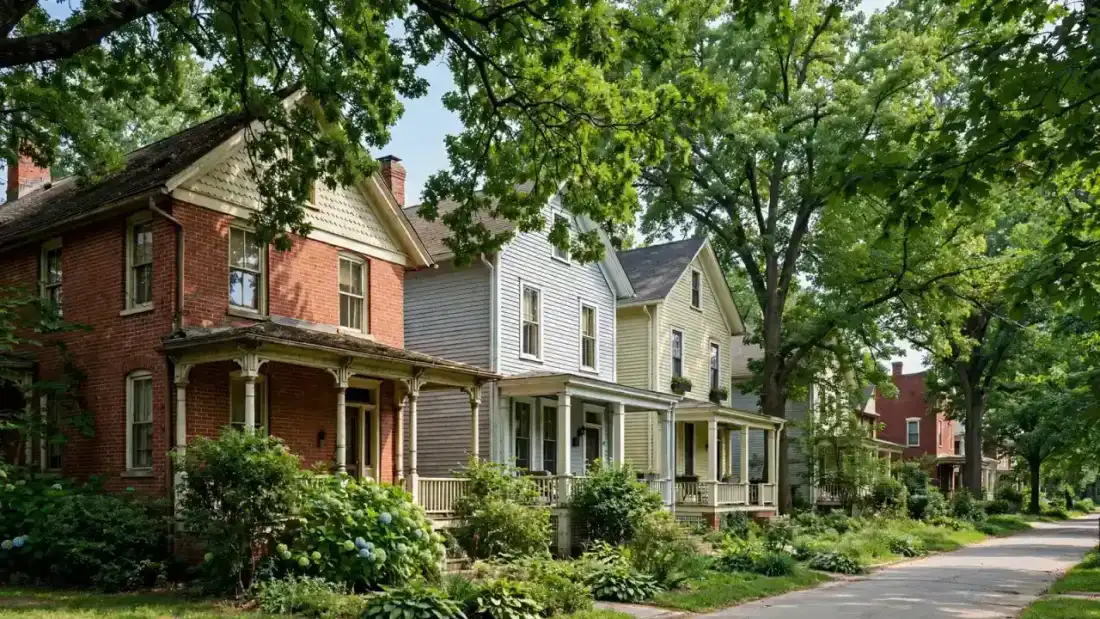
- Many homes are detached or semi-detached houses and bungalows on individual lots.
- Attic air handlers in older houses face summer heat and need secondary drain pans.
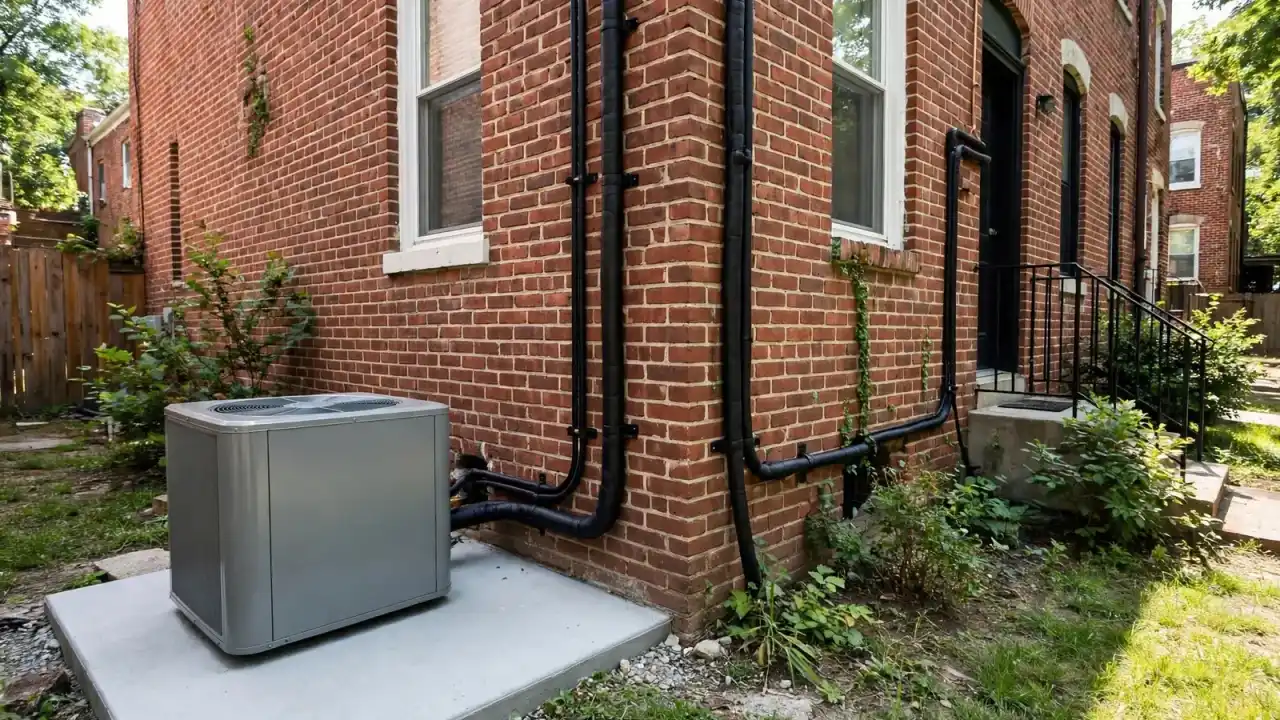
- Condensers usually sit on the ground in side or rear yards.
- The covered ZIP codes for Brookland on this line are 20017 and 20018.
Coverage
Brookland ZIP codes served
Calls from these Brookland ZIP codes can reach an independent HVAC technician who works there.
- 20017Brookland core, Catholic University, Michigan Park edges and nearby streets.
- 20018Woodridge, Langdon and neighboring streets east of Brookland.
About Brookland
A suburb inside the city
Brookland grew between roughly 1870 and 1930 around a rail line and the new Catholic University of America, which opened in 1887. Many Catholic institutions followed, earning it the nickname Little Rome. Its housing is unusual for DC: Victorian and Craftsman houses, bungalows and semi-detached homes on their own lots, with porches, yards and mature trees. The 12th Street commercial strip and the Brookland-CUA Metro station anchor the neighborhood.
Systems
How Brookland homes are cooled
Attic air handler
Serving upper floors through ceiling vents.
Lower-level air handler
Serving lower floors, sometimes the whole house.
Ground-level condenser
In side or rear yards.
Heat pump plus gas furnace
Switching to gas on the coldest days.
Mini-splits
In additions and renovated rooms.
Window units
In older homes and rentals.
Attics
Attic air handlers in older houses
Many Brookland houses have an air handler in the attic, often added when central air was installed decades ago. Attics in summer can be far hotter than outdoors, so equipment and ducts there must be well insulated. The unit sits above finished ceilings, so a clogged condensate drain can stain or collapse plaster below. A secondary drain pan with a safety switch is essential. Attic access in older houses may be through a small hatch or pull-down ladder, which limits equipment size during replacement.
Problems
Common Brookland AC problems
| Problem | Likely cause | Usual approach |
|---|---|---|
| Ceiling stain under attic unit | Clogged drain or overflowing pan | Clear drain, add or fix safety switch |
| Upstairs warm, downstairs cool | Hot attic ducts, single system | Insulate ducts, zoning, second system |
| Yard condenser struggling | Shrubs, leaves, fences | Clean coil, clear space |
| Old system weak cooling | Leaks, age, R-22 | Repair or plan replacement |
| Dual-fuel changeover issues | Settings or controls | Adjust controls |
| Musty basement air | Humidity and drainage | Dehumidify, clear drains |
Before you call
First checks for a Brookland home
- 1
Thermostat
Upstairs and downstairs if there are two.
- 2
Filters
Attic and basement units.
- 3
Breakers
One per unit, plus outdoor units.
- 4
Yard unit
Fan spinning, coil clear of leaves.
- 5
Ceilings
Any stains under the attic unit.
- 6
Basement
Water around the air handler.
Yards
Yards, trees and ground units
Unlike rowhouse neighborhoods, Brookland condensers usually sit on the ground in side or rear yards. That makes service easier, but trees drop leaves, seeds and twigs, shrubs grow into units, and lawn mowers throw grass clippings at coils. Dryer vents blowing lint toward a unit are another common problem.
Keep at least two feet clear around the condenser, trim shrubs back and aim dryer vents away. A gentle rinse of the coil with the power off helps in spring.
- Easier service access
- Leaves and clippings clog coils
- Keep shrubs back
- Aim dryer vents away
Two systems
Two-system houses
Larger Brookland houses often have two systems: one in the basement serving the first floor and one in the attic serving the second floor. Each has its own thermostat, filter, breaker and outdoor unit. When one floor is uncomfortable, the first step is figuring out which system serves it. Upstairs systems work harder because heat rises and attic ducts gain heat, so they often fail first. If your upstairs system is much older than the downstairs one, plan for its replacement.
Ducts
Older ductwork
Ductwork added to older Brookland houses may run through attics, basement ceilings, closets and old chimney chases. Older metal ducts may be poorly sealed at joints, and flexible ducts in attics can sag, kink or come apart. Leaky ducts in an attic pull hot air in and push cool air out, wasting capacity. ENERGY STAR notes that sealing and insulating ducts improves efficiency and comfort. [2] Technicians can inspect accessible ducts, measure airflow and recommend sealing, insulating or replacing sections.
Decisions
Repair or replace for Brookland systems
| Factor | Leans repair | Leans replace |
|---|---|---|
| Age | Younger system | Old, especially R-22 |
| Failure | Electrical parts, drains | Compressor, coil |
| Comfort | Floors cool evenly | Upstairs never comfortable |
| Ducts | Sound and sealed | Leaky or undersized |
| Heating | Separate heat source works well | Want heat pump heating too |
Basements
Basements and humidity
Brookland basements, often older stone or block, can be damp in summer. Basement air handlers, ducts and condensate pumps live in that humidity. Rust on cabinets, wet insulation on ducts and musty smells are common signs. A dehumidifier, good drainage and insulated ducts help. If the basement is finished or rented, cooling and dehumidifying it properly matters for comfort and to avoid mold on cool surfaces.
The visit
A typical service visit
- 1
Identify systems
Which units serve which floors.
- 2
Check controls
Thermostats and wiring.
- 3
Inspect indoor units
Filters, coils, blowers, drains, pans.
- 4
Inspect outdoor units
Coils, fans, capacitors, refrigerant.
- 5
Look at ducts
Accessible runs in attic and basement.
- 6
Explain findings
System by system.
Students
Catholic University and student housing
Many houses near Catholic University and along the Metro corridor are rented to students and young professionals, often with several unrelated tenants sharing a house. Rental houses may have older systems, window units or mini-splits added by owners. Tenants should report cooling problems to the landlord in writing; landlords arrange repairs to the equipment they provide. Shared houses benefit from a simple note near the thermostat explaining settings and where the filter is.
New buildings
New construction near the Metro
Around the Brookland-CUA Metro station and along Monroe Street, newer apartment and mixed-use buildings use individual heat pumps or building systems. Residents usually call management for repairs. Townhomes built in recent decades on former institutional land often have modern heat pumps with attic air handlers, which share the attic heat and drainage concerns of older houses.
Choosing help
Questions to ask a Brookland technician
Will you check both systems?
Many homes have two.
Do you work on dual-fuel setups?
Heat pump plus gas furnace.
Can you inspect attic ducts?
Leaks and insulation.
Will you add a safety switch?
Protects ceilings under attic units.
Do you service window units?
Some technicians do; many replace them.
What is your DC license?
Issued by DLCP.
Shade
Porches, trees and shade
Brookland's porches and big trees shade many houses, keeping first floors cooler. Upper floors and attics, however, still take the full summer sun on their roofs. Trees also mean more leaves and seed debris on condensers and in gutters. Gutters that overflow onto a condenser can soak the unit and, in winter, coat heat pumps in ice. Keep gutters clear above outdoor units.
Seasons
Brookland seasonal checklist
- SpringService both systems; clear attic drain.
- SummerMonthly filter checks; keep yard unit clear.
- FallClear leaves; heat pump check.
- WinterKeep heat pumps clear of snow and gutter drips.
Eastern streets
Woodridge, Langdon and the 20018 streets
East of Brookland, the 20018 ZIP code covers Woodridge, Langdon and nearby areas with a mix of detached houses, bungalows, duplexes and mid-century homes, many on larger lots with yards and driveways. Systems here are often similar to Brookland's: ground-level condensers, basement or attic air handlers and occasional heat pumps. Some mid-century houses were built with ducts for forced-air heating, making central air easier to add. Others still rely on window units.
Bungalows
Bungalows and story-and-a-half houses
Bungalows and story-and-a-half houses have upstairs rooms tucked under sloped roofs, with knee walls and small attic spaces on each side. Those rooms heat up fast in summer and are notoriously hard to cool, because ducts often run through the hot knee-wall spaces and insulation is thin. Solutions include insulating knee walls and roof slopes, sealing ducts, adding a mini-split for the upstairs rooms, or improving airflow with dedicated returns. A technician can measure temperatures and suggest options.
Summary
Brookland AC at a glance
| Topic | What to know |
|---|---|
| Housing | Detached houses, bungalows, semi-detached homes |
| Systems | Attic and basement air handlers, yard condensers |
| Common issues | Hot upstairs, attic drains, leaky ducts |
| Prevention | Safety switches, duct sealing, yard clearance |
| Upgrades | Heat pumps, mini-splits for upstairs rooms |
Upstairs comfort
Cooling a hot upstairs
- 1
Measure
Compare upstairs and downstairs temperatures.
- 2
Check ducts
Leaks and insulation in attic and knee walls.
- 3
Check returns
Upstairs needs good return airflow.
- 4
Check equipment
Upstairs system size and charge.
- 5
Consider options
Insulation, mini-splits or zoning.
Furnaces
Gas furnaces and air conditioning
Many Brookland houses heat with a gas furnace in the basement, with an evaporator coil sitting on top of the furnace and connected to an outdoor condenser for cooling. In these systems, the furnace blower also drives air conditioning, so a furnace blower or control board problem stops cooling too. The coil above the furnace can collect dust and drip into the furnace if its drain clogs. Annual service checks both heating and cooling sides, including combustion safety and carbon monoxide testing on the furnace.
Attic replacements
Replacing an attic air handler
Replacing an attic unit in an older house means getting old equipment out and new equipment in through limited openings, often a pull-down ladder or small hatch. Installers may need to bring units in sections or enlarge an opening. New units should sit on a platform with a secondary pan and safety switch, with insulated ducts and a properly sloped drain. If the attic is very hot, some owners choose to move the air handler to a closet on the upper floor, or switch to ductless heads for upstairs rooms.
Typical repairs
Common Brookland repairs
Drain clearing and safety switches
Attic units.
Capacitors and fan motors
Yard units after heat waves.
Coil cleaning
Leaves and clippings.
Furnace blower repair
Affects cooling too.
Duct sealing
Attic and basement runs.
Leak repair
Older systems.
Long-time residents
Older homeowners and long-time residents
Brookland has many long-time residents who have lived in their homes for decades. Older adults are more vulnerable to heat, so a cooling failure in summer deserves quick attention. Family members and neighbors can help by checking on older residents during heat waves, keeping filters changed and arranging spring service.
Radiator homes
Adding cooling to radiator houses
Some Brookland houses still heat with radiators and have no ducts. Owners can add cooling with ducts run through closets and the attic to an attic air handler serving the upper floor, with another system or mini-splits for the first floor. Small-duct high-velocity systems and ductless mini-splits are popular because they avoid large chases. Heat pump versions of these systems can also reduce reliance on the boiler for heating.
Storms
Summer storms and power
Summer thunderstorms can bring down tree limbs across Brookland's leafy streets, damaging power lines and sometimes outdoor units. After a storm, check the condenser for fallen branches, look at the line set and electrical whip for damage and check breakers if the system does not restart. Pepco handles power line issues; call a technician for equipment damage.
Warning signs
Signs your system needs service
- Upstairs slower to coolAttic system or ducts.
- New ceiling stainAttic drain problem.
- Yard unit noisyFan motor or debris.
- Short cyclingCharge, controls or sizing.
- Higher billsSystem working harder.
Summary
Brookland in short
Expect detached or semi-detached houses with yard condensers and air handlers in attics and basements. Protect ceilings with safety switches, insulate and seal attic ducts, keep yard units clear of leaves and clippings, and treat a hot upstairs as a design problem as well as a repair problem.
Heat pumps
Heat pumps in detached houses
Detached Brookland houses are good candidates for heat pumps: there is usually room in the yard for an outdoor unit, and ducts already serve the house if central air exists. Many owners replacing an old air conditioner choose a heat pump that also heats, often keeping a gas furnace as backup in a dual-fuel setup. Outdoor units should sit on pads above snow level, away from gutter drips, with clear airflow. In winter, steam during defrost is normal.
Additions
Additions and sunrooms
Rear additions, sunrooms and converted porches are common on Brookland houses. These spaces often have many windows, thin insulation and no ducts from the main system, or a single duct that cannot keep up. A ductless mini-split is a common fix, giving the addition its own heating and cooling without overloading the main system. Shading and window film help too.
Factors
What affects cooling in a Brookland house
Attic heat
Air handlers and ducts lose capacity.
Roof shape
Sloped ceilings upstairs heat quickly.
Tree shade
Cooler first floors, more debris.
Windows
Older single-pane windows add heat.
Additions
Glass-heavy rooms need extra cooling.
Semi-detached
Semi-detached houses
Many Brookland homes are semi-detached, sharing one wall with a neighbor. Each half usually has its own system, but condensers may sit close together along the shared side yard or in adjoining rear yards. Exhaust from one unit can blow toward the other, and noise can carry. Placement, clearance and occasional coordination with neighbors during repairs or replacements help. The shared wall also reduces heat gain on that side, so the exposed sides and the roof matter most for cooling.
Records
Keeping records
Keep a simple file for each system: model and serial numbers, install date, refrigerant type, filter size, service notes and any permits. In two-system houses, label which thermostat and breaker belong to which system. These records help technicians diagnose problems quickly and help future owners understand the house.
Yard care
Lawn care around outdoor units
When mowing or trimming near a condenser, point the discharge chute away from the unit so clippings do not pack into the coil, and avoid hitting the refrigerant lines or electrical whip with a string trimmer. Damaged line insulation should be replaced, and a nicked electrical conduit needs an electrician.
FAQ
Brookland AC questions
Why is my upstairs warmer than downstairs?
Hot attic ducts and a single system often cause this.
Does my attic air handler need a second drain pan?
Yes, to protect ceilings if the main drain clogs.
Why does my yard condenser get so dirty?
Trees, shrubs, mowing and dryer lint all clog coils.
Can old Brookland houses have heat pumps?
Yes, ducted, ductless or paired with a gas furnace.
Who fixes AC in a student rental?
The landlord; tenants should report problems in writing.
Can a new air handler fit through my attic hatch?
Sometimes units must be disassembled or the opening enlarged.
Why does my basement smell musty?
Humidity and drainage issues; a dehumidifier often helps.
Should I insulate attic ducts?
Yes. Insulated ducts lose less cooling in hot attics.
Which system serves which floor?
Usually basement for the first floor and attic for the second. A technician can label them.
Are my attic ducts leaking?
Leaky attic ducts are common in older houses. A technician can inspect and measure.
Why is my basement air handler rusty?
Basement humidity corrodes cabinets over time.
Can gutters affect my outdoor unit?
Overflowing gutters can soak units and cause ice on heat pumps in winter.
Do Brookland townhomes have attic air handlers?
Many newer ones do, with the same heat and drainage concerns.
Why are my bungalow's upstairs rooms so hot?
Sloped roofs, thin insulation and hot knee-wall ducts. Insulation and mini-splits often help.
Does a mid-century house make adding AC easier?
Often, if it already has forced-air ducts.
If my furnace blower fails, will my AC stop?
Yes, in systems where the furnace blower moves air for cooling.
Can I move my attic air handler?
Sometimes to an upper-floor closet, which avoids attic heat.
Can a fallen branch damage my AC?
Yes. Check the unit, lines and wiring after storms and call a technician if damaged.
Can I add AC to a radiator house without big ducts?
Yes, with high-velocity or ductless systems.
Should my sunroom have its own unit?
Often. A mini-split can cool a glass-heavy room without overloading the main system.
Is a heat pump a good fit for a detached Brookland house?
Often, especially with existing ducts and yard space for the outdoor unit.
Do semi-detached houses share AC systems?
Usually each half has its own, though outdoor units may sit close together.
What records should I keep for my AC?
Model and serial numbers, install date, refrigerant type, filter size and service notes.
Can a string trimmer damage my AC lines?
Yes. Trim carefully and replace damaged insulation or wiring.
Should I fence my yard condenser?
A low screen is fine if it leaves plenty of airflow and service room.
How far should shrubs be from my condenser?
Keep at least about two feet clear on all sides for airflow and service.
Do I need two thermostats for two systems?
Yes, each system has its own.