
Key facts: AC Not Cooling
- Restricted airflow from dirty filters or coils is one of the most common reasons a system cools poorly [1].
- Washington's summers are hot and humid, with frequent days above 90°F [2].
- Only technicians certified under EPA Section 608 may handle refrigerant [3].
- An air conditioner removes humidity as well as heat; a system that cannot keep up leaves rooms clammy.
- Many DC rowhouses have long refrigerant line runs to rooftop condensers.
The problem
What it means when the AC runs but does not cool
A central air conditioner cools by moving heat. Indoors, a fan pulls warm air across a cold evaporator coil, where refrigerant absorbs heat and the air gives up moisture. The refrigerant carries that heat to the outdoor condenser, where a fan and coil release it outside. If any part of that loop slows down, the system keeps running but the air coming out of the vents is only slightly cool, or not cool at all.
The causes fall into a few groups: air cannot move properly across the indoor coil, the outdoor unit cannot release heat, the refrigerant charge is wrong, an electrical part such as a capacitor or contactor has failed, or the controls are telling the system to do the wrong thing. A good technician works through these in a logical order rather than guessing.
Causes
Common causes in DC homes
Clogged air filter
The simplest part in the system and the most common culprit.
Read moreDirty outdoor coil
Cottonwood fluff, leaves and city grime block the condenser.
Low refrigerant from a leak
Systems do not use up refrigerant; low charge means a leak.
Read moreFailed capacitor or fan motor
The outdoor fan stops and the compressor overheats.
Read moreUndersized or overworked system
Top-floor rooms in rowhouses heat up fast.
Leaky or crushed ducts
Cool air escapes into attics, walls or basements.
Before you call
What you can safely check first
These checks take a few minutes and fix a surprising number of problems.
- 1
Thermostat
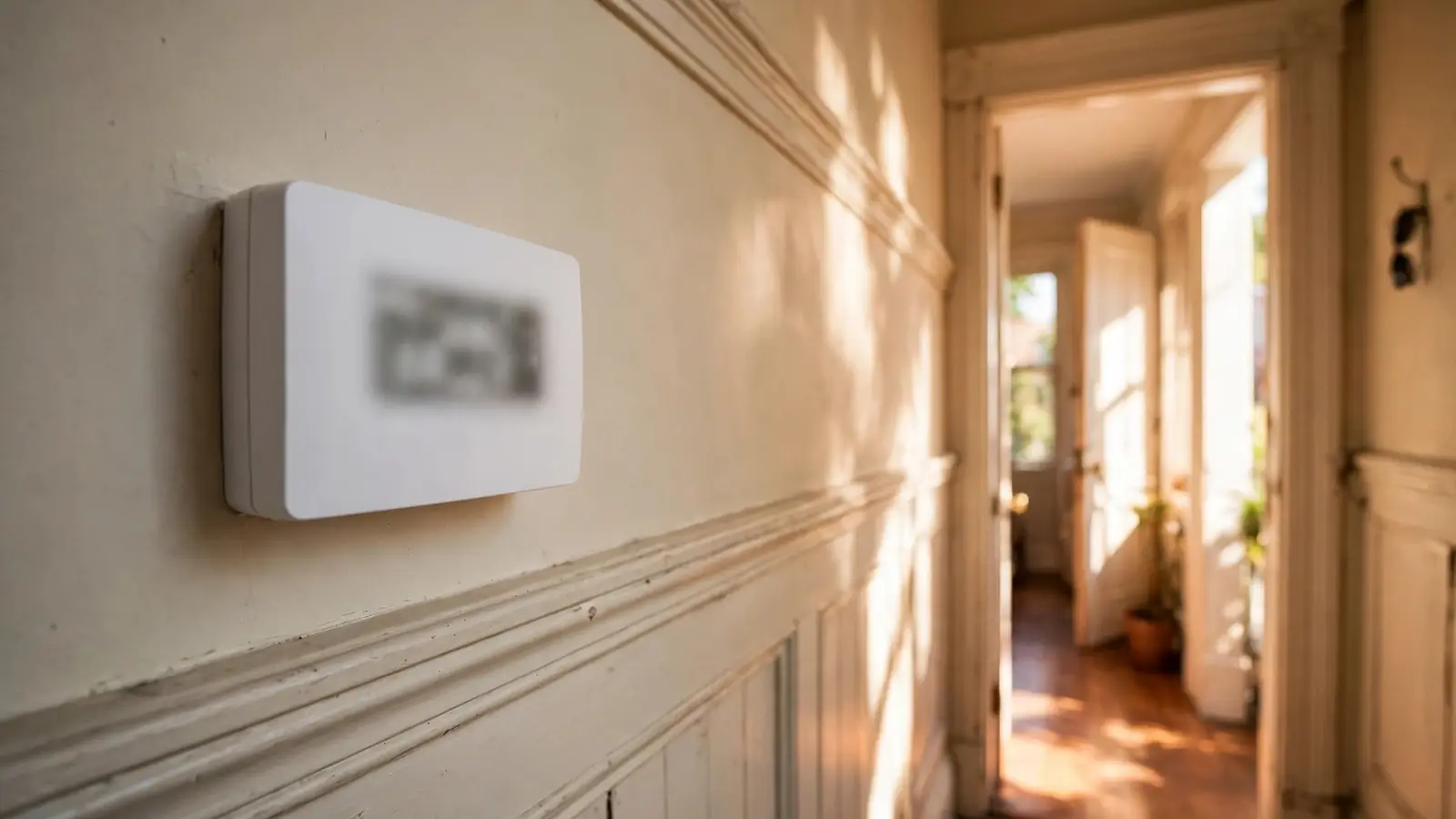
Set to cool, a few degrees below room temperature, fan on auto.
- 2
Filter
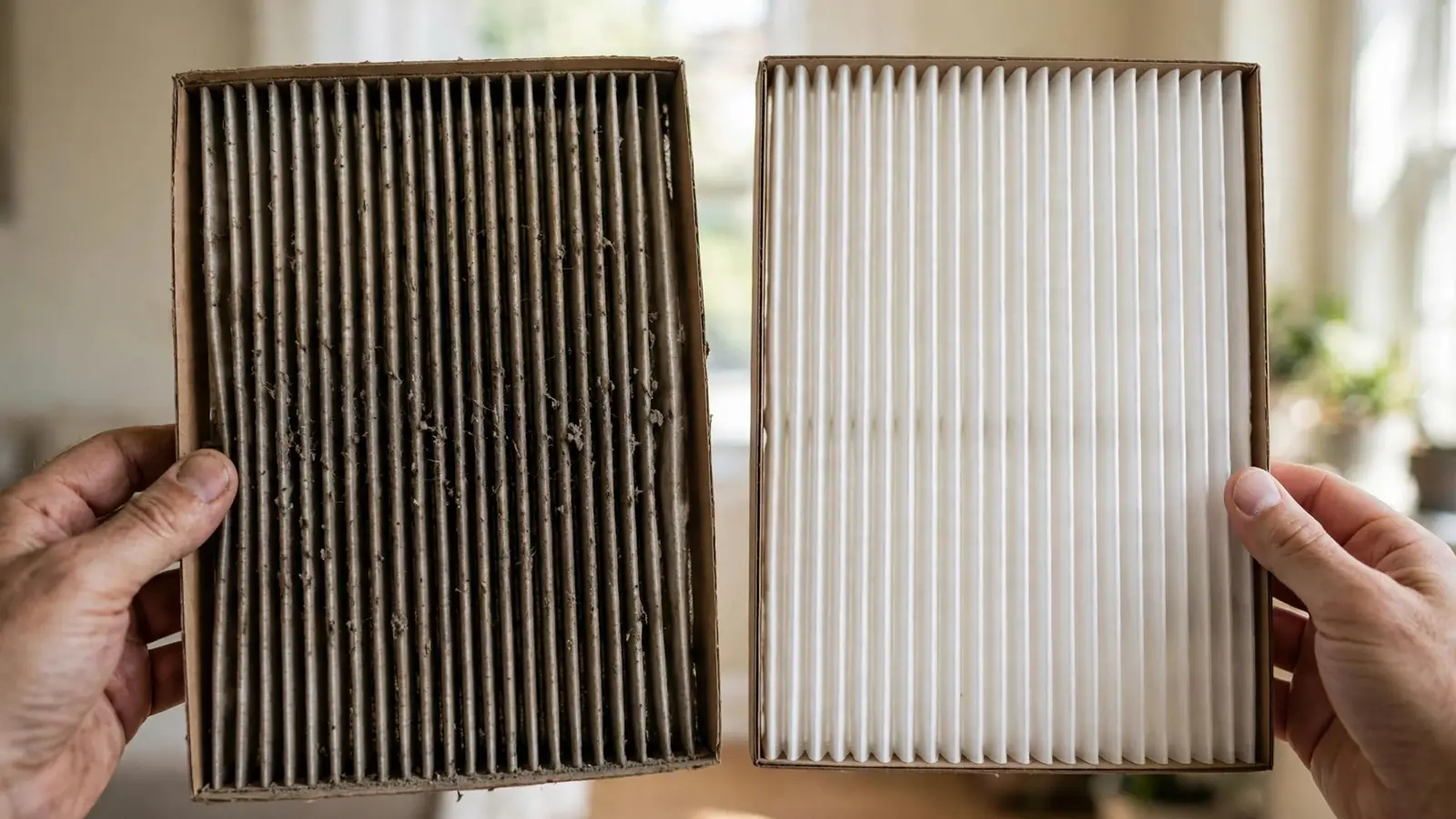
Pull it out; if you cannot see light through it, replace it.
- 3
Breakers
Check both the indoor unit and outdoor unit breakers; reset once only.
- 4
Outdoor unit
Is the fan spinning? Is the coil blocked by leaves or debris?
- 5
Supply vents
Make sure registers are open and not blocked by furniture.
- 6
Condensate
Look for water around the indoor unit or a tripped float switch.
Diagnosis
Symptoms and likely causes
| What you notice | Likely cause | Next step |
|---|---|---|
| Weak airflow from vents | Dirty filter, frozen coil, blower problem | Replace filter; if iced, turn off and call |
| Air from vents is room temperature | Outdoor unit not running, low refrigerant | Check outdoor fan and breaker |
| Outdoor fan not spinning, unit humming | Failed capacitor or fan motor | Turn off and call |
| Ice on the indoor coil or refrigerant lines | Low airflow or low refrigerant | Turn off to thaw; call |
| Some rooms cool, others do not | Duct issues, top-floor heat gain | Check registers; ask about ducts |
| System runs constantly on hot days | Undersized, dirty coils, low charge | Have it inspected |
Local factors
How DC housing affects cooling
Washington's housing stock is old and varied. Many homes are rowhouses built between the 1880s and 1930s, long before central air. Air conditioning was added later, often with an air handler in a closet or attic crawlspace and ducts squeezed into soffits and closets, or with a condenser on the roof connected by long refrigerant lines. Others use ductless mini-splits added room by room, or window units. Detached homes in neighborhoods such as Chevy Chase and Brookland often have attic air handlers.
These retrofits can work well, but they are prone to particular problems: long line sets that lose refrigerant through small leaks, attic air handlers that bake in summer heat, undersized ducts that limit airflow, and rooftop condensers that collect debris and take full sun. Top floors heat up quickly under flat roofs, and basements may be cool and damp. A technician who understands rowhouses will look at the whole path, not just the outdoor unit.
Climate
Summer in Washington
DC's climate is humid subtropical. Summers are hot and sticky, with many days in the 90s and high humidity, and heat waves can push the heat index well above 100°F. Dense neighborhoods with lots of pavement and rooftops trap heat, a pattern known as the urban heat island effect, so nights stay warm too. [5]
Air conditioners in DC therefore run long hours, and problems show up during the first real heat of the season or in the middle of a heat wave. A spring check of filters, coils and drainage reduces surprises.
- Many 90°F days each summer
- High humidity
- Heat islands in dense blocks
- Long run times stress parts
Airflow
Airflow problems explained
Air conditioners are designed to move a certain amount of air across the indoor coil. When a filter clogs, a blower motor weakens, or ducts are blocked or leaky, less air passes over the coil. The coil gets colder than it should, moisture on it freezes, and the ice blocks airflow even more. The result is weak, barely cool air and sometimes water leaking as the ice melts.
Fixing airflow problems can be as simple as a new filter. Sometimes it means cleaning a dirty evaporator coil, repairing a blower motor, or sealing and adjusting ducts. In rowhouses with small return grilles, adding return air can make a real difference.
Refrigerant
Refrigerant problems explained
Refrigerant circulates in a sealed loop and is not consumed. If a system is low, it has a leak. Topping up refrigerant without finding the leak is a temporary fix, and handling refrigerant requires EPA Section 608 certification. [3] Older systems may use R-22, which has been phased out of production, so servicing them can be more involved. Newer systems use refrigerants such as R-410A or newer lower-impact refrigerants as federal rules phase down high-global-warming-potential HFCs.
A technician checks pressures and temperatures, looks for oil stains and corrosion at joints, and may use electronic leak detectors or dye. Leaks in long rooftop line sets or at flare fittings on mini-splits are common in DC.
Electrical
Electrical and control problems
A failed run capacitor can stop the outdoor fan or compressor from starting, leaving the indoor fan blowing warm air. A pitted contactor may not close. Loose wiring, a failing thermostat or a tripped safety switch on a clogged condensate line can all shut down cooling. These are diagnosed with meters and are among the more straightforward repairs, though they involve high voltage and should be left to a professional.
Scope
Quick fix or bigger repair
| Problem | Typical scope |
|---|---|
| Dirty filter | Homeowner can replace |
| Tripped breaker | Reset once; repeated trips need a technician |
| Failed capacitor | Usually a short repair visit |
| Dirty coils | Cleaning visit |
| Refrigerant leak | Find, repair, then recharge |
| Failed compressor | Major repair or system replacement decision |
Repair or replace
When it might be time to replace
Most repairs are worth doing. But if a system is old, uses phased-out R-22, has a failed compressor or a major leak in the indoor coil, or has never kept the house comfortable, it may make sense to discuss replacement. A technician can explain the options; the choice is yours. Newer high-efficiency systems and heat pumps can also handle heating, which matters in DC's cold winters.
Rooftops
Rooftop condensers on rowhouses
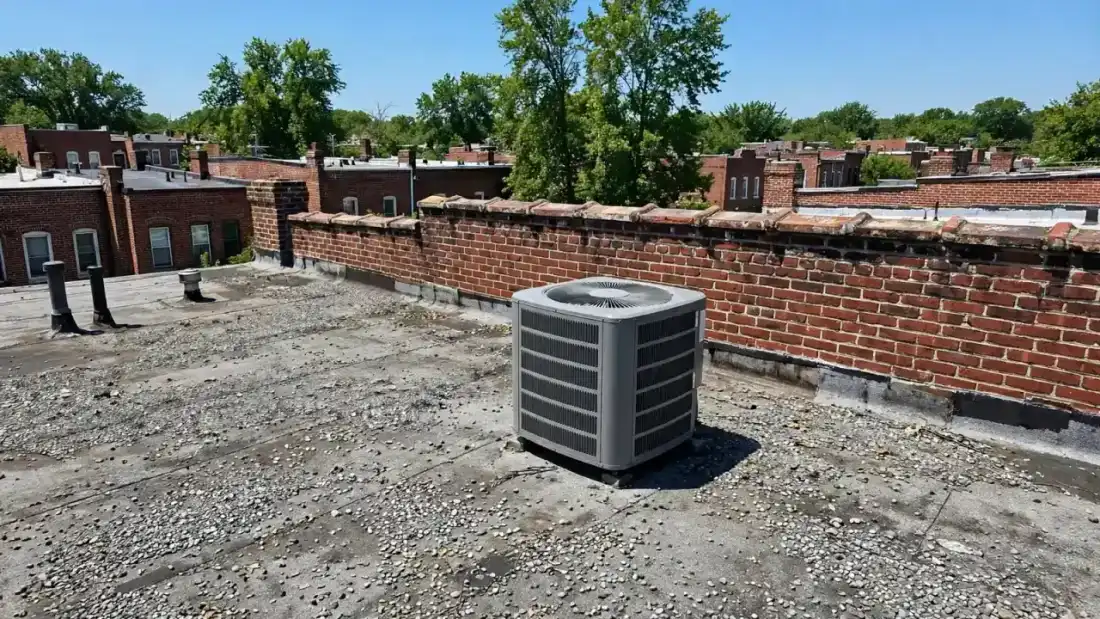
Across Capitol Hill, Columbia Heights, Petworth and Shaw, the outdoor half of many central systems sits on the roof. Rooftop condensers sit in full sun on dark, flat roofs, which can be much hotter than the air at street level. They collect leaves, seed fluff and grit, and they are easy to forget because nobody sees them. When the coil clogs or the fan slows, the condenser cannot shed heat, pressures climb and cooling falls off on the hottest afternoons, exactly when you need it most.
Access matters too. Technicians may need a roof hatch, ladder or neighbor's permission to reach the unit. Let the technician know how the roof is reached when you call. Rooftop units also have long refrigerant lines running down through the house, and those lines need to be well insulated and free of leaks.
Indoor units
Basement and closet air handlers
In rowhouses, the indoor air handler is often in a basement, utility closet or a small attic space above the top floor. Basement units in older homes deal with humidity and dust; attic units bake in summer heat. Both rely on a condensate drain to carry away water removed from the air. If that drain clogs, a safety float switch can shut the system off, or water can overflow into ceilings and floors. A technician checks the drain, pan and float switch as part of any no-cooling call.
System types
DC system types and typical issues
| Setup | Where you see it | Typical issues |
|---|---|---|
| Split system, rooftop condenser | Rowhouses | Hot roof, debris, long line sets |
| Split system, ground condenser | Detached homes, end units | Shrubs and fences blocking airflow |
| Attic air handler | Detached homes, top-floor retrofits | Heat, condensate overflow |
| Ductless mini-split | Retrofitted rowhouses, condos | Dirty filters, flare-joint leaks |
| Window units | Older rentals | Limited capacity, poor dehumidifying |
| Heat pump | Newer installs and replacements | Defrost and reversing valve issues |
Ducts
Ductwork in older homes
Ductwork added to older homes is often a compromise. Ducts may run through unconditioned attics, crawl spaces or exterior walls, lose cool air through gaps, or be too small for the airflow the system needs. Flexible duct can sag or get crushed. Rooms at the end of long runs, or on the top floor, may never feel as cool as the rest of the house. A technician can measure airflow and temperatures at registers, look for leaks and disconnected sections, and suggest sealing, insulation or balancing. ENERGY STAR notes that sealing and insulating ducts can improve comfort and efficiency. [1]
The visit
What happens on a no-cooling service visit
A methodical visit avoids guesswork and unnecessary parts.
- 1
Listen to your description
When it started, what you hear, what you have tried.
- 2
Check controls
Thermostat settings, wiring and power.
- 3
Inspect indoors
Filter, blower, evaporator coil, drain and float switch.
- 4
Inspect outdoors
Fan, coil, capacitor, contactor and compressor.
- 5
Measure
Temperatures, pressures and electrical readings.
- 6
Explain
What failed, the options and what you decide.
Staying cool
Comfort while you wait
If your system stops cooling during a heat wave, take heat seriously. Close blinds on sunny windows, use fans to move air, stay on the lowest floor, drink water and check on older neighbors. The National Weather Service and Ready.gov publish heat safety advice. DC opens cooling centers during heat emergencies; check the District's announcements. People with heart or lung conditions, older adults and infants are most at risk from heat.
Prevention
Habits that prevent no-cooling calls
- Change filters regularlyMonthly checks during summer.
- Keep the outdoor coil clearGently hose off debris with the power off.
- Keep plants and fences backLeave space around ground units for airflow.
- Have a spring checkCoils, drain, refrigerant and electrical parts.
- Do not set the thermostat extremely lowIt will not cool faster and can freeze the coil.
Multifamily
Condos and apartment buildings
Many DC residents live in condos and apartment buildings, from converted rowhouses to large mid-century and new buildings. Cooling systems vary: individual split systems with condensers on a shared roof, through-wall units, packaged terminal units, or water-source heat pumps connected to a building loop. In a condo, the unit owner usually handles their own equipment, while the association manages the roof, shared risers and building loops. In a rental, the landlord is usually responsible. Check your documents or lease before calling, and tell the technician what type of system you have.
Room units
Window units and portable ACs
Some older apartments and rowhouses still rely on window units or portable air conditioners. When these stop cooling, the cause is often a dirty filter, a blocked coil or a unit too small for the room. Clean the filter, make sure the outdoor side is not blocked and seal gaps around the unit. Portable units with a single exhaust hose often struggle in hot weather because they pull warm air into the room. Window units should be plugged directly into a properly rated outlet, not an extension cord.
Humidity
Why the house feels clammy
An air conditioner that runs in short bursts or is oversized may cool the air quickly but not long enough to remove much moisture, leaving the house cool but clammy. A system with low airflow or a dirty coil may not remove enough moisture either. In DC's humid summers, comfort depends on dehumidifying as much as cooling. Technicians can check run times, airflow settings and coil condition, and some systems have settings that improve moisture removal. In damp basements, a separate dehumidifier often helps.
Before calling
Information to have ready when you call
- Type of systemCentral, heat pump, mini-split or window units.
- Where the units areRoof, yard, basement, attic or closet.
- Age if you know itLabels on the outdoor unit often show the date.
- What you have checkedFilter, breakers, thermostat.
- Access detailsRoof hatch, gate codes, building management.
Choosing help
Choosing a technician in DC
In the District, HVAC and refrigeration mechanics are licensed through the Department of Licensing and Consumer Protection, and mechanical work that changes or replaces equipment may need a permit from the Department of Buildings. Refrigerant work requires EPA Section 608 certification. Ask any technician about their license, insurance and certification, and for a written description of the work before it starts. You are free to choose who works on your home.
Historic homes
Older homes and historic districts
Much of DC lies within historic districts, including Capitol Hill, Georgetown, Anacostia and parts of Shaw and Dupont Circle. Replacing or moving equipment that is visible from the street, such as a condenser on a front roof or a line set on a facade, may need historic review. Repairs that do not change what is visible generally do not. If a repair turns into a replacement, ask the technician whether the new equipment's location could need approval.
FAQ
AC not cooling questions
Why is my AC running but not cooling?
Usually restricted airflow, a dirty outdoor coil, low refrigerant from a leak or a failed electrical part.
Can a dirty filter really stop cooling?
Yes. It can starve the coil of air and even cause it to freeze.
Should I turn the AC off if it is not cooling?
If you see ice or the outdoor fan is stopped, yes, to protect the compressor.
Is low refrigerant normal?
No. Refrigerant is not used up; low charge means a leak.
Why is my top floor so hot?
Heat rises and flat roofs absorb sun. Ducts and system size may also be factors.
Can I add refrigerant myself?
No. Handling refrigerant requires EPA Section 608 certification.
How often should filters be changed?
Check monthly in summer; replace when dirty.
Does humidity affect how cool the house feels?
Yes. A system that cannot remove moisture leaves rooms feeling clammy.
What does a technician check first?
Thermostat, airflow, filter, coils, outdoor unit, electrical parts and refrigerant pressures.
Is my old R-22 system still repairable?
Often, but refrigerant is limited, so repairs may be more involved.
Can a rooftop condenser overheat?
Yes. Hot roofs, debris and full sun make rooftop units work harder. Keep the coil clean.
Why did my AC shut off with water near the indoor unit?
A clogged condensate drain may have tripped the float switch. A technician can clear it.
Do I need to be home for a rooftop unit repair?
Often, to give access to the roof hatch or stairs. Ask when you call.
Who fixes the AC in my condo?
Usually the unit owner handles their own equipment; the association handles shared roofs and systems. Check your documents.
Why does my house feel damp even though it is cool?
The system may not be running long enough or moving air correctly to remove moisture.
Do I need a permit for an AC repair in DC?
Simple repairs usually do not. Replacements and new installations often do; ask the technician.
Who licenses HVAC technicians in DC?
DC's Department of Licensing and Consumer Protection issues HVAC and refrigeration licenses.
Will closing vents in unused rooms help?
Usually not. It can reduce airflow across the coil and make problems worse.
Why does my AC struggle only in the afternoon?
Outdoor heat peaks then, and rooftop units get hottest. Dirty coils make it worse.