
Key facts: Petworth
- Petworth was developed largely in the early twentieth century with porch-front rowhouses [1].
- Many homes have been renovated with basement apartments and new HVAC systems.
- Condensers are often in rear yards reached by alleys or on rear roofs.
- Ductless mini-splits are common in renovated basements and upper floors [2].
- The covered ZIP code for Petworth on this line is 20011.
Coverage
Petworth ZIP codes served
Calls from these Petworth ZIP codes can reach an independent HVAC technician who works there.
- 20011Petworth and neighboring areas including parts of Brightwood Park, Manor Park and the streets around Georgia Avenue.
About Petworth
Porch-front rows and renovation
Petworth grew rapidly in the 1910s, 1920s and 1930s as streetcar lines pushed north along Georgia Avenue. Builders lined its streets with brick rowhouses featuring deep front porches, small front yards and alleys behind. Many original houses had radiator heat and no cooling. Over the past two decades, Petworth has seen extensive renovation, with many homes gutted and rebuilt inside, basements dug out into separate apartments, and modern HVAC systems installed.
That history means Petworth has an unusually wide range of systems: window units in unrenovated houses, older central systems added in the 1980s and 1990s, and new heat pumps and mini-splits in recent renovations. Some renovated houses have two or three separate systems.
Systems
Typical Petworth setups
Rear-yard condenser
Reached through the alley; easy to service.
Rear roof condenser
Behind the main roof line, out of street view.
Air handler in the cellar
Feeding ducts up through closets.
Attic or top-floor air handler
For upper floors in two-system homes.
Mini-splits in basement units
Separate cooling for rental apartments.
Window units
Still common in unrenovated homes.
Renovations
Renovated houses and new systems
Renovated Petworth houses often have new ducted heat pumps or mini-splits installed by the renovation contractor. New systems usually work well, but problems sometimes trace back to rushed installation: poor duct sealing, undersized returns, drain lines without enough slope, or refrigerant charges never verified by weight. If a newer system has never cooled evenly or leaks water, a thorough check of installation details can solve problems that simple repairs will not.
Problems
Common Petworth AC problems
| Problem | Likely cause | Usual approach |
|---|---|---|
| Uneven cooling between floors | Single system, duct design | Balance, zoning or second system |
| Water in finished basement | Drain slope or pump failure | Fix drain, replace pump |
| New system short cycling | Oversizing or settings | Adjust settings, check charge |
| Alley condenser damaged | Debris, vehicles, vandalism | Repair and add protection |
| Old system weak cooling | Leak or aging parts | Repair or plan replacement |
| Mini-split error codes | Sensors, drains, leaks | Diagnose and repair |
Before you call
First checks for a Petworth home
- 1
Which system?
Identify which thermostat and unit serve the problem area.
- 2
Thermostat
Mode and setpoint.
- 3
Filter
At the relevant air handler or mini-split head.
- 4
Breakers
Each system may have its own.
- 5
Outdoor unit
In the rear yard or on the roof.
- 6
Water
Around basement units or pumps.
Alleys
Alleys and rear yards
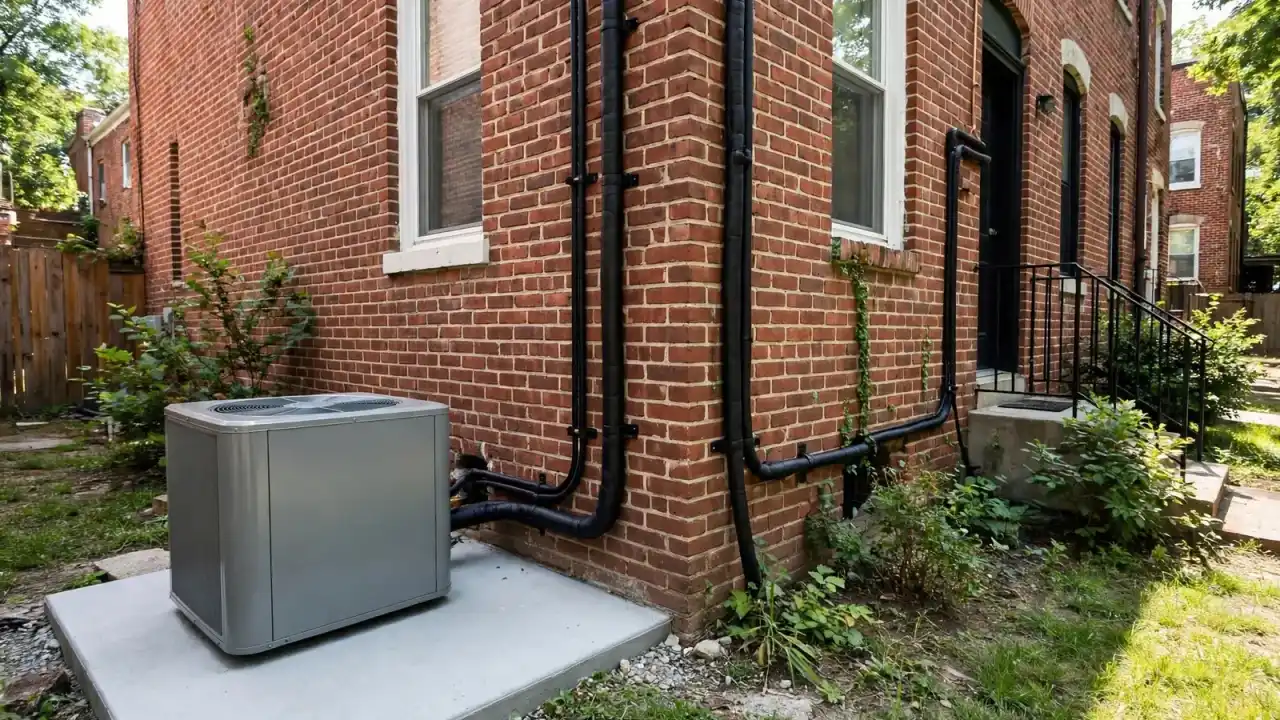
Many Petworth houses have rear yards opening onto alleys, where condensers often sit on pads. Alley locations make service easier but expose units to trash, leaves, vehicles and occasional theft of copper or parts. Cages and secure mounting help.
Keep the area around the unit clear, trim vines and shrubs back, and make sure nothing is stored against the coil.
- Easy service access
- Exposed to debris and damage
- Protective cages help
- Keep vines and storage clear
Comfort
Porches, shade and top floors
Deep front porches shade the first floor of Petworth houses, but second floors and any third-floor additions under flat roofs heat up quickly. Rear additions with large windows and skylights, common in renovations, add heat too. If the top floor or a rear addition never cools well, the solution may be a separate mini-split or zone rather than more capacity in the main system.

Older systems
Older central systems from the 1980s and 1990s
Before the recent wave of renovations, many Petworth owners added central air in the 1980s and 1990s, often with a basement air handler, ducts running through closets and a condenser in the rear yard. Those systems are now thirty or more years old in some cases, typically use R-22 refrigerant and may have rusting cabinets and corroded coils. They can still be repaired, but leaks and compressor failures become more common, and parts and refrigerant are harder to source. When a major failure occurs, owners often compare the repair with a modern heat pump that also heats the home.
Radiator homes
Radiators and new cooling
Many Petworth houses kept their original hot-water radiators even after renovation, with cooling provided by a separate ducted system or mini-splits. In these homes, the cooling system and heating system are independent. Some owners now add heat pumps to provide most of their heating as well, using the boiler only on the coldest days. Mini-split heat pumps are particularly popular because they can be added room by room without ducts.
Decisions
Repair or replace for older Petworth systems
| Factor | Leans repair | Leans replace |
|---|---|---|
| Age | Under about 12 years | Over about 15 years |
| Refrigerant | R-410A or newer | R-22 |
| Failure | Capacitor, contactor, small leak | Compressor, evaporator coil |
| Comfort | House cools evenly | Floors never comfortable |
| Plans | No renovation soon | Renovation coming |
Basements
Humidity in renovated basements
Dug-out basements with new apartments sit partly below ground, where walls stay cool and air is damp. Air conditioning in a basement unit may cool the space quickly without running long enough to remove moisture, leaving it clammy. Mini-splits with dry mode, a separate dehumidifier or a properly sized system help. Basement units also need reliable condensate drainage, often through a pump, since floor drains may not be nearby. Musty smells or condensation on cold surfaces are signs that humidity needs attention.
Two systems
A service visit in a two-system home
- 1
Identify each system
Which thermostat controls which unit.
- 2
Check the lower system
Basement air handler and its condenser.
- 3
Check the upper system
Attic or closet unit and its condenser.
- 4
Compare performance
Temperatures and pressures on each.
- 5
Look at drains
Both indoor units.
- 6
Explain findings
Problems on each system separately.
Commercial edges
Georgia Avenue and the commercial strip
Georgia Avenue runs through the heart of Petworth with shops, restaurants and new apartment buildings. Homes on side streets near the avenue may share alleys with commercial buildings whose rooftop equipment, kitchen exhaust and dumpsters affect nearby condensers. Grease and debris can coat coils, and heat from commercial units can raise temperatures around residential equipment. If your condenser is near commercial exhaust, plan on more frequent coil cleaning.
Multifamily
New apartment buildings near the Metro
Around the Georgia Avenue-Petworth Metro station, newer apartment and condo buildings use individual heat pumps, often in closets, with outdoor units on the roof or packaged units in walls. Residents usually report problems to building management, which arranges approved contractors. Condo owners may handle their own in-unit equipment, subject to building rules on roof access and contractors.
Choosing help
Questions to ask a Petworth technician
Can you service both my systems?
Many homes have two or more.
Do you work on mini-splits?
Common in basement units.
Will you check how my system was installed?
Useful for newer systems with persistent problems.
Which DC license do you hold?
Through the Department of Licensing and Consumer Protection.
Do you handle R-22 systems?
Many older systems still use it.
Will you test the basement pump?
Important for basement units.
Climate
Summer heat on Petworth streets
Petworth's tree canopy helps, but many blocks have long uninterrupted rows of brick and pavement that absorb heat. Summer days bring long stretches above 90 degrees with high humidity. Air conditioners run hard, and systems that struggled the previous summer are likely to struggle again. Spring checks and filter changes before June reduce surprises.
Warning signs
Signs it is time for a check
- Upper floor slower to coolAirflow or refrigerant.
- Outdoor unit noisyFan motor or loose panels.
- Water near basement unitDrain or pump.
- Thermostat short cyclingSettings, sizing or charge.
- Higher electric billsSystem working harder.
Records
Permits and records
Mechanical work such as new systems and replacements in DC generally needs a permit from the Department of Buildings. Permit records can help you understand when equipment was installed and by whom. When you have work done, keep the permit number, start-up readings and warranty information. If you sell, these records reassure buyers that the system was installed properly.
Summary
Petworth AC at a glance
| Topic | What to know |
|---|---|
| Housing | 1910s to 1930s porch-front rowhouses |
| Systems | Old and new central systems, mini-splits, window units |
| Condensers | Rear yards by alleys or rear roofs |
| Common issues | Uneven floors, basement humidity, install shortcuts |
| Rentals | Basement units with separate systems |
| Upgrades | Heat pumps increasingly common |
Installation check
Getting a renovated system checked
- 1
Measure airflow
At supply registers and returns.
- 2
Check refrigerant charge
By temperatures and pressures.
- 3
Inspect ducts
Sagging flex, leaks, disconnected runs.
- 4
Check drains
Slope, traps and pump.
- 5
Check line set insulation
Especially outdoors.
- 6
Compare size to load
Rough load estimate for the house.
Window units
Window units in unrenovated houses
Unrenovated Petworth houses and some rentals still rely on window air conditioners. These are simple machines, but they have limits: they cool one room, struggle in large or sunny rooms, and remove less moisture than central systems. Keep their filters clean, make sure the outdoor side is not blocked, seal gaps around the unit and plug them directly into a properly rated outlet. Old window units can be energy hogs, and running several on old household wiring can trip breakers. If you are thinking about replacing several window units, a multi-zone mini-split is a common next step.
Winter
Heat pumps and winter in Petworth
Many new Petworth systems are heat pumps, which heat in winter as well as cool. Outdoor units in rear yards should sit on pads high enough to stay above snow and let defrost water drain away. Units on rear roofs need clearing after heavy snow. In winter, steam rising from the unit during defrost is normal; thick ice that does not clear is not. Backup electric heat in ducted systems takes over in very cold weather or during defrost.
Typical repairs
Common Petworth fixes
Capacitor replacement
Common after heat waves.
Drain clearing
Basement and attic units.
Pump replacement
Basement condensate pumps.
Leak repair
Older systems and mini-split flares.
Duct sealing
Renovation shortcuts.
Thermostat setup
Heat pump configuration.
Rentals
Renters and landlords
Many Petworth renters live in English basements or whole rowhouses rented from individual owners. In DC, landlords generally must keep the systems they provide in working order. Tenants should report cooling problems in writing, describe what they see and allow access for repairs. Owners should keep systems maintained and respond promptly in heat waves.
Additions
Third-floor additions and pop-ups
Some Petworth rowhouses have been expanded upward with a third-floor addition, sometimes called a pop-up. These top floors sit under new flat roofs, often with large windows and sometimes roof decks. They are usually served by their own system or mini-split, since the original system was never sized for them. If a third floor is hard to cool, check whether it has its own system, whether its ducts run through unconditioned space and whether its windows face west. Roof insulation in these additions matters as much as the equipment.
Summary
Petworth in short
Expect a mix of systems from different decades. Know which thermostat runs which unit, keep alley and rooftop condensers clear, watch basement drains and pumps, and if a renovated system never worked right, have the installation checked rather than repeating small repairs. Heat pumps and mini-splits are increasingly the default when older systems are replaced.
Families
Grandmother suites and multigenerational homes
Some Petworth families use basement units for older relatives rather than renting them out. Older adults are more sensitive to heat and humidity, so their cooling system deserves priority attention in summer. Check that basement units cool and dehumidify well, that thermostats are easy to read and operate, and that someone checks on them during heat waves.
Seasons
Petworth seasonal checklist
- April or MaySpring check on every system.
- June to AugustMonthly filter checks; keep units clear.
- SeptemberClear leaves from alley and roof units.
- OctoberHeat pump check before winter.
- After stormsCheck rooftop and alley units for debris.
Electrical
Electrical capacity in older rows
Older Petworth houses that were not fully renovated may still have small electrical services. Adding central air or a heat pump, especially with electric backup heat, can require a service upgrade. A licensed electrician should confirm capacity before new equipment is installed, and the HVAC installer and electrician should coordinate circuits and disconnects. Renovated houses usually have updated services, but it is worth confirming when adding a second system.
Trees
Street trees and coils
Petworth's mature street and alley trees shade houses but drop leaves, seeds and catkins that pack into condenser coils each spring and fall. A gentle rinse from inside out with the power off, or a professional coil cleaning, keeps airflow up.
FAQ
Petworth AC questions
Why does my renovated house cool unevenly?
Duct design, returns or a single system serving several floors are common causes.
Who fixes AC in my basement apartment?
Usually the owner; report problems in writing.
Is my alley condenser at risk?
Alley units face debris and damage; cages and secure mounting help.
Why does my new system leak water?
Drain slope or pump problems from installation are common.
Can I add cooling to my unrenovated house?
Yes, with ducts or ductless mini-splits.
Why is my rear addition so hot?
Large windows and skylights add heat; a separate zone may help.
Do I need two systems?
Many larger renovated houses use one for lower floors and one for upper floors.
Are window units still allowed?
Yes, though permanent systems are quieter and more efficient.
Is my 1990s central air worth repairing?
Often, for smaller problems. For major failures on R-22 systems, many owners consider replacement.
Why is my basement apartment clammy?
The system may not run long enough to dehumidify. Dry mode or a dehumidifier helps.
Can I keep radiators and add a heat pump?
Yes. Many owners use heat pumps for most heating and keep the boiler for the coldest days.
Who fixes AC in a Petworth apartment building?
Usually building management for shared systems; condo owners may handle in-unit equipment.
Why is my condenser dirty so quickly?
Nearby commercial exhaust, alley debris and trees can clog coils.
How do I know if my renovated house's AC was installed properly?
A technician can measure airflow, check the charge and inspect ducts and drains.
Can I find out if a permit was pulled?
DC Department of Buildings permit records show mechanical permits.
Can window units trip my breakers?
Yes, especially several on older wiring. Use proper outlets and avoid extension cords.
Is steam from my heat pump in winter normal?
It is. Defrost cycles melt frost off the coil and release steam.
Why is my third-floor addition hard to cool?
It may need its own system, better roof insulation or shading on large windows.
Why is my end-unit rowhouse warmer?
An exposed side wall gains more heat than shared walls.
Can a condenser bother my neighbor?
Noise and vibration can travel; placement and pads help.
Will adding a heat pump need a bigger electrical service?
Sometimes, especially in older houses with small services.
Do mini-splits need their own circuits?
Yes, outdoor units need dedicated circuits sized for the equipment.
Can I run my AC during a power flicker?
Systems usually restart after a short delay; check breakers if not.
How often should my condenser coil be cleaned?
At least once a year, more often near trees or commercial exhaust.
Should I cover my alley condenser in winter?
Avoid full covers that trap moisture; a top-only cover is sometimes used on AC-only units.
Can roof decks block rear-roof condensers?
Yes, if built too close. Keep clearance for airflow and service.