
Key facts: Columbia Heights
- Columbia Heights is one of the most densely populated neighborhoods in DC [1].
- Many rowhouses have been converted into two- to four-unit condominiums.
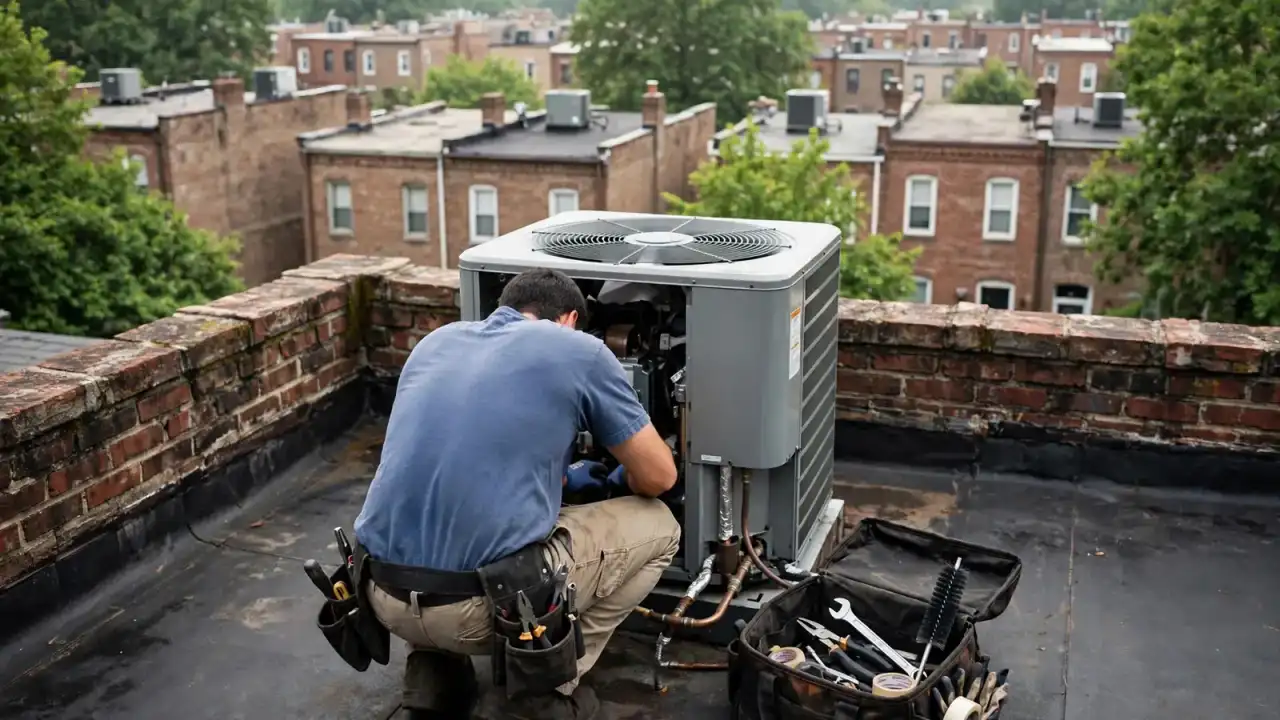
- Condensers for several units often share one rowhouse roof.
- Condo associations usually manage roofs and common elements; owners usually handle in-unit equipment.
- The covered ZIP codes for Columbia Heights on this line are 20009 and 20010.
Coverage
Columbia Heights ZIP codes served
Calls from these Columbia Heights ZIP codes can reach an independent HVAC technician who works there.
- 20010Columbia Heights core, Park View edges and the streets around 14th Street and Columbia Road.
- 20009Southern Columbia Heights, Adams Morgan edges and nearby rowhouse blocks.
About Columbia Heights
A dense, mixed neighborhood
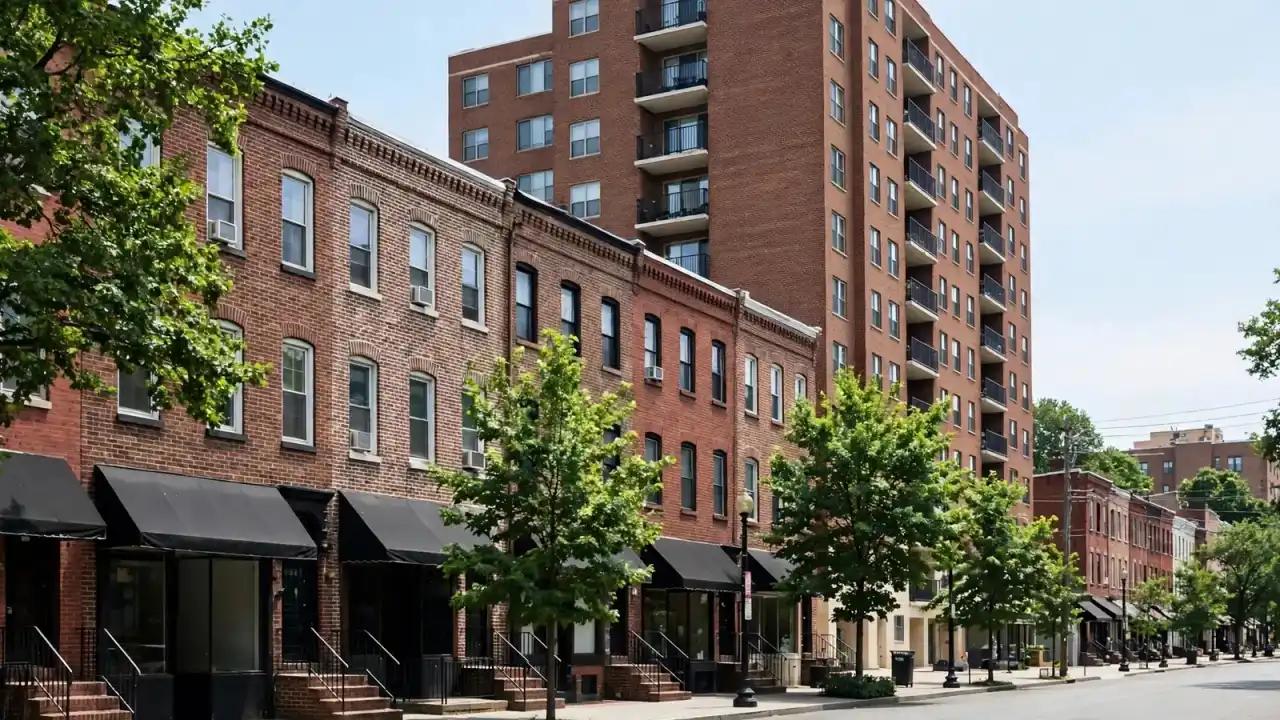
Columbia Heights developed between roughly 1870 and 1930 as a streetcar suburb on the hill above downtown, with blocks of brick rowhouses and grand apartment buildings. After decades of decline, the opening of the Columbia Heights Metro station in 1999 and new retail along 14th Street brought rapid redevelopment. Today the neighborhood mixes original rowhouses, many converted into condos, older apartment buildings and large new mixed-use buildings.
Systems
How Columbia Heights homes are cooled
Condo split systems
Each unit's condenser on the shared rowhouse roof.
Mini-splits
Common in conversions where ducts are hard to run.
Through-wall units
In older apartment buildings.
Water-source heat pumps
In some larger buildings, on a building loop.
Central single-family systems
In rowhouses still used as one home.
Window units
In some rentals and older buildings.
Conversions
Rowhouse condo conversions
Many Columbia Heights rowhouses have been split into two to four condominium units, often one per floor plus a basement unit. Each unit usually has its own system: a split system with its condenser on the shared roof, a mini-split, or a combination. Lines for upper-floor units run down through closets or chases that may pass through other units. That means a leak or drain problem in one unit can affect a neighbor below, and repairs may require access through another owner's space.
Problems
Common Columbia Heights AC problems
| Problem | Likely cause | Usual approach |
|---|---|---|
| Several condensers crowded on one roof | Hot exhaust recirculating | Clean coils, improve spacing |
| Condensate leak into unit below | Clogged drain or pump | Clear drain, repair ceiling damage |
| Mini-split error codes | Sensors, leaks, drains | Diagnose and repair |
| Through-wall unit not cooling | Dirty filter, failed fan or leak | Clean, repair or replace |
| Uneven cooling in a duplex unit | Shared ducts or poor design | Balance or add zones |
| Water-source unit faults | Strainers, valves, loop temperature | Coordinate with building engineer |
Before you call
First checks in a condo or apartment
- 1
Know your system
Split, mini-split, through-wall or water-source.
- 2
Wall control or handset
Mode and setpoint.
- 3
Filters
In the air handler, head or wall unit.
- 4
Breaker
Your unit's panel.
- 5
Building issues
Ask management if others are affected.
- 6
Access
Roof keys, building rules and contacts.
Rooftops
Crowded rooftops
A converted rowhouse roof may hold three or four condensers side by side, plus a roof deck. Units placed too close can blow hot air into each other, raising pressures and cutting efficiency. Debris collects between them, and technicians may have to move carefully around neighbors' equipment.
Labeling each condenser with its unit number saves time and avoids mistakes during repairs. If your association is replacing roofing, plan protection or temporary moves for the units.
- Label each unit
- Keep spacing for airflow
- Clean all coils regularly
- Plan around roof work
Apartment buildings
Older apartment buildings
Columbia Heights has many apartment buildings from the 1920s through the 1960s, some converted to condos or co-ops. These buildings often rely on through-wall air conditioners or packaged terminal units under windows, sometimes paired with radiator heat from a central boiler. Some have been retrofitted with individual split systems or mini-splits, with condensers on the roof or balconies. In co-ops and rentals, the building usually controls what equipment is allowed and who may work on it.
Wall units
Through-wall and packaged units
Through-wall air conditioners and packaged terminal units sit in a metal sleeve in the exterior wall, with the indoor side facing the room and the outdoor side open to the outside. Problems include dirty filters and coils, failed fan motors, refrigerant leaks, broken controls and water leaking indoors when the sleeve is not pitched correctly to drain outside. Because the units are self-contained, a technician may repair them in place or slide in a replacement that fits the same sleeve. Wall sleeves come in standard sizes, but not every unit fits every sleeve, so matching is important.
Responsibilities
Who usually handles what
| Situation | Usually handled by |
|---|---|
| In-unit split system in a condo | Unit owner |
| Roof and roof access | Condo association |
| Through-wall unit in a rental | Landlord |
| Water loop and cooling tower | Building |
| Window unit owned by tenant | Tenant |
| Shared drain riser | Association or building |
Leaks
Leaks that cross unit lines
In stacked condos, a condensate leak from an upper unit's air handler or mini-split can drip into the ceiling below. Clogged drains, failed pumps and missing secondary pans are the usual causes. If you notice a stain or drip from above, tell your neighbor and the association quickly and take photos. Owners with air handlers above other units should have drains cleaned annually and consider secondary pans with safety switches.
Planning
Planning a repair in a condo building
- 1
Check your documents
Who is responsible for the equipment.
- 2
Notify management
Especially for roof or common-area work.
- 3
Confirm contractor rules
Insurance certificates and work hours.
- 4
Arrange access
Roof keys, elevator reservations, other units.
- 5
Schedule the technician
Share the building details in advance.
- 6
Keep records
Repair notes and any damage photos.
New buildings
New mixed-use buildings around 14th Street
Large buildings with shops on the ground floor and apartments or condos above line 14th Street and Irving Street near the Metro. These typically use individual heat pumps in each unit, often in a closet, with outdoor units on the roof or with water-source heat pumps connected to a building loop. Residents in rentals contact management. Condo owners may call their own technicians, but the building usually controls roof access and may require approved contractors. In water-source systems, problems sometimes come from the building loop rather than the unit, so technicians coordinate with the building engineer.
Water-source
Water-source heat pumps explained
A water-source heat pump looks like a small air handler in a closet, but instead of an outdoor unit it exchanges heat with water circulating through the building. In summer, a cooling tower on the roof removes heat from that loop; in winter, a boiler adds heat. Common problems include clogged strainers on the water connections, stuck valves, dirty filters, failed fans or compressors, and loop temperatures outside the normal range. Because they connect to building plumbing, repairs may need the building's maintenance staff to isolate water lines.
Choosing help
Questions to ask a technician in a condo building
Have you worked in this building?
Familiarity with access and systems helps.
Do you service water-source heat pumps?
Not every contractor does.
Can you provide an insurance certificate?
Many buildings require one.
Will you label my condenser?
Prevents mix-ups on shared roofs.
How will you protect common areas?
Elevators, halls and roofs.
What if the problem is building-side?
They should explain and coordinate.
Climate
Heat and density
Columbia Heights is one of the densest parts of the city, with little open space and a lot of pavement and rooftops. That density concentrates heat, especially on summer evenings when buildings release stored warmth. Top-floor units under flat roofs and units with west-facing windows run warmest. Window film, blinds and keeping filters clean help systems keep up during long heat waves.
Maintenance
Seasonal care for condo owners
- Spring serviceCoil, drain and refrigerant check.
- Filter changesEvery one to three months, monthly in heavy use.
- Drain cleaningPrevents leaks into units below.
- Roof unit checkAfter storms and in fall.
- Heat pump checkBefore winter.
Single-family rows
Rowhouses still used as single homes
Not every Columbia Heights rowhouse has been divided. Single-family rows here look much like those in Petworth or Capitol Hill, with rooftop or rear-yard condensers, basement or top-floor air handlers and ducts through closets. Some have a separate basement unit with its own mini-split. The same issues apply: hot top floors, long line sets, basement drainage and the occasional system added in the 1980s or 1990s now nearing the end of its life.
Renters
Renters in Columbia Heights
Many Columbia Heights residents rent, whether in large buildings, small apartment buildings or individual condo units owned by investors. In DC, landlords are generally responsible for equipment they provide. Report cooling problems in writing to your landlord or property manager, describe what you see and allow access. If you rent a condo unit from an individual owner, they may need to coordinate with the association for roof access. Keep a copy of every request.
Summary
Columbia Heights AC at a glance
| Topic | What to know |
|---|---|
| Housing | Rowhouses, condo conversions, apartment buildings |
| Systems | Shared-roof splits, mini-splits, wall units, water-source |
| Responsibility | Owner for in-unit equipment; association for common areas |
| Access | Roof keys, building rules, other units |
| Common issues | Crowded roofs, leaks between units, building loops |
Quick steps
If your unit is not cooling
- 1
Check settings and filter
Simple fixes first.
- 2
Ask neighbors
If everyone is warm, it may be the building.
- 3
Check your breaker
Each unit has its own panel.
- 4
Check for drips
Around the air handler or below a head.
- 5
Call management or a technician
Depending on who is responsible.
Nearby blocks
Adams Morgan and Park View edges
The 20009 and 20010 ZIP codes stretch into the edges of Adams Morgan and Park View. Adams Morgan has rowhouses and older apartment buildings on steep streets, many divided into units, with restaurants and bars below on 18th Street and Columbia Road. Park View has porch-front rows similar to Petworth. The same patterns apply: shared roofs, condo conversions, basement units and buildings with their own rules. Commercial kitchen exhaust near restaurant strips can coat nearby condenser coils.
Mini-splits
Ductless retrofits in conversions
When developers converted rowhouses into condos, many installed mini-splits rather than running ducts through several units. A single outdoor unit may serve one condo with several heads, or each condo may have its own. Line sets run through walls, closets and sometimes exterior chases at the rear. Mini-split problems here include clogged drains that drip down walls, flare leaks, sensors and boards, and outdoor units crowded together on roofs or rear balconies. Cleaning indoor filters monthly in summer prevents many issues.
Typical repairs
Common Columbia Heights repairs
Drain clearing
Stops leaks into units below.
Mini-split flare repair
Common slow leaks.
Through-wall unit replacement
Same sleeve, new unit.
Capacitor and fan motor
Roof units in heat waves.
Water-source unit service
Strainers, valves and filters.
Coil cleaning
Crowded and greasy rooftops.
Noise
Noise between units
In converted rowhouses, equipment noise travels easily. An air handler in a closet next to a neighbor's bedroom, or a condenser above a top-floor unit, can cause complaints. Worn blower motors, loose panels and failed vibration isolators get louder over time. A technician can tighten, isolate and replace worn parts. When replacing equipment, quieter variable-speed models and careful placement reduce noise.
Replacements
Replacing equipment in a condo
Replacing a condenser on a shared roof or a through-wall unit in a condo usually needs association approval, especially if placement or size changes. New split systems may need a DC mechanical permit. Crews may need to reserve the elevator, protect hallways and coordinate roof access. Plan replacements in spring or fall when possible, so you are not without cooling in a heat wave while approvals are arranged.
Co-ops
Older co-ops and radiator buildings
Some older Columbia Heights and Mount Pleasant-edge buildings are co-ops heated by central boilers and radiators. Cooling is often by window or through-wall units, and co-op boards set rules on which units are allowed, how they are installed and who services them. Before buying or replacing a unit, check the board's rules.
Timeline
Seasonal timeline for condo owners
| When | What |
|---|---|
| Late winter | Plan any replacements; get approvals |
| Spring | Service visit; clean drains and coils |
| Summer | Monthly filter checks; watch for drips |
| Fall | Heat pump check; clear roof debris |
Basements
Basement units in converted rowhouses
The lowest unit in a converted rowhouse often sits partly below ground, with its own mini-split or small split system and a condensate pump. These units feel cool but can be humid, and they sit below every other unit's drain lines and plumbing. Water stains in a basement ceiling may come from upstairs drains rather than the basement unit's own system. Basement owners should know where upstairs air handlers and drain lines run, and associations should keep shared drain risers clear.
Summary
Columbia Heights in short
Know your system type and who is responsible for it, label your condenser on a shared roof, keep drains clear to protect neighbors, plan replacements with your association and coordinate building access before the technician arrives. For buildings with central loops, check whether a problem is yours or the building's before calling.
Balconies
Balcony and rear-wall units
Where roofs are full or inaccessible, mini-split outdoor units sometimes sit on rear balconies or wall brackets. Balcony units need clearance for airflow and drainage, and should not block exits. Wall-bracket units must be securely anchored into masonry, and their drain water should not drip onto neighbors' balconies or walkways below. Associations often have rules on where these units may go.
Heat safety
Heat safety in dense buildings
Upper floors of older apartment buildings without central air can become dangerously hot in heat waves. If your unit's cooling fails, move to a cooler part of the building or a cooled public place, drink water and check on neighbors, especially older residents living alone. DC activates cooling centers during heat emergencies.
FAQ
Columbia Heights AC questions
Is my condo AC my job or the association's?
Usually yours, for in-unit equipment. The association handles roofs and common areas.
Can a technician get on my building's roof?
Usually with association permission and access arrangements.
My upstairs neighbor's AC leaked into my unit. What now?
Tell them and the association quickly, document damage and contact insurers.
Why do the condensers on my roof run hot?
Crowded units recirculate hot air; spacing and clean coils help.
Is a broken wall-sleeve unit worth fixing?
Often; some are replaced in the same wall sleeve.
Who handles a water-source heat pump?
Owners usually handle the unit; the building handles the loop.
Are mini-splits allowed in condo conversions?
Usually, subject to association rules on outdoor unit placement.
How do I know which condenser is mine?
Ask the association or a technician to label each unit.
Can any technician work in my condo building?
Some buildings require approved contractors or insurance certificates. Check first.
Why does my through-wall unit leak inside?
The sleeve may not be pitched to drain outside, or the drain is blocked.
Who handles a leak from the unit above?
Tell the neighbor and association promptly and document the damage.
How is a loop-connected heat pump different?
A closet unit that exchanges heat with a building water loop instead of an outdoor unit.
Why is my top-floor unit warmer?
Flat roofs absorb heat; insulation and shading help.
How do I know if a cooling problem is building-wide?
Ask neighbors. If several units are warm, it may be the building system.
Should renters call a technician directly?
Usually not. Report to the landlord, who arranges repairs.
Can my air handler bother my neighbor?
Worn motors and loose panels can be noisy. A technician can quiet them.
Do Adams Morgan rowhouses have the same issues?
Largely yes: shared roofs, conversions and basement units.
Do I need association approval to replace my condenser?
Often, especially if placement or size changes.
Can co-op boards restrict AC units?
Yes. Check the board's rules before buying or installing.
Why is there water in my basement unit's ceiling?
It may come from an upstairs unit's drain or air handler. Tell the association and neighbors.
Should my condenser be labeled?
Yes. On shared roofs, labels prevent mix-ups during repairs.
Can a mini-split go on my balcony?
Often, if association rules allow and there is clearance for airflow and drainage.
Where can I go if my apartment is too hot?
A cooler part of the building, a cooled public place or a DC cooling center during heat emergencies.
Do I need an elevator reservation for a repair?
Some buildings require it for large parts or equipment. Ask management.
Can I install a window unit in my condo?
Check association rules; some restrict window units on street-facing sides.
Who clears a shared drain riser?
Usually the association or building maintenance.
How long does a through-wall swap take?
Often a short visit when the new unit fits the existing sleeve.