
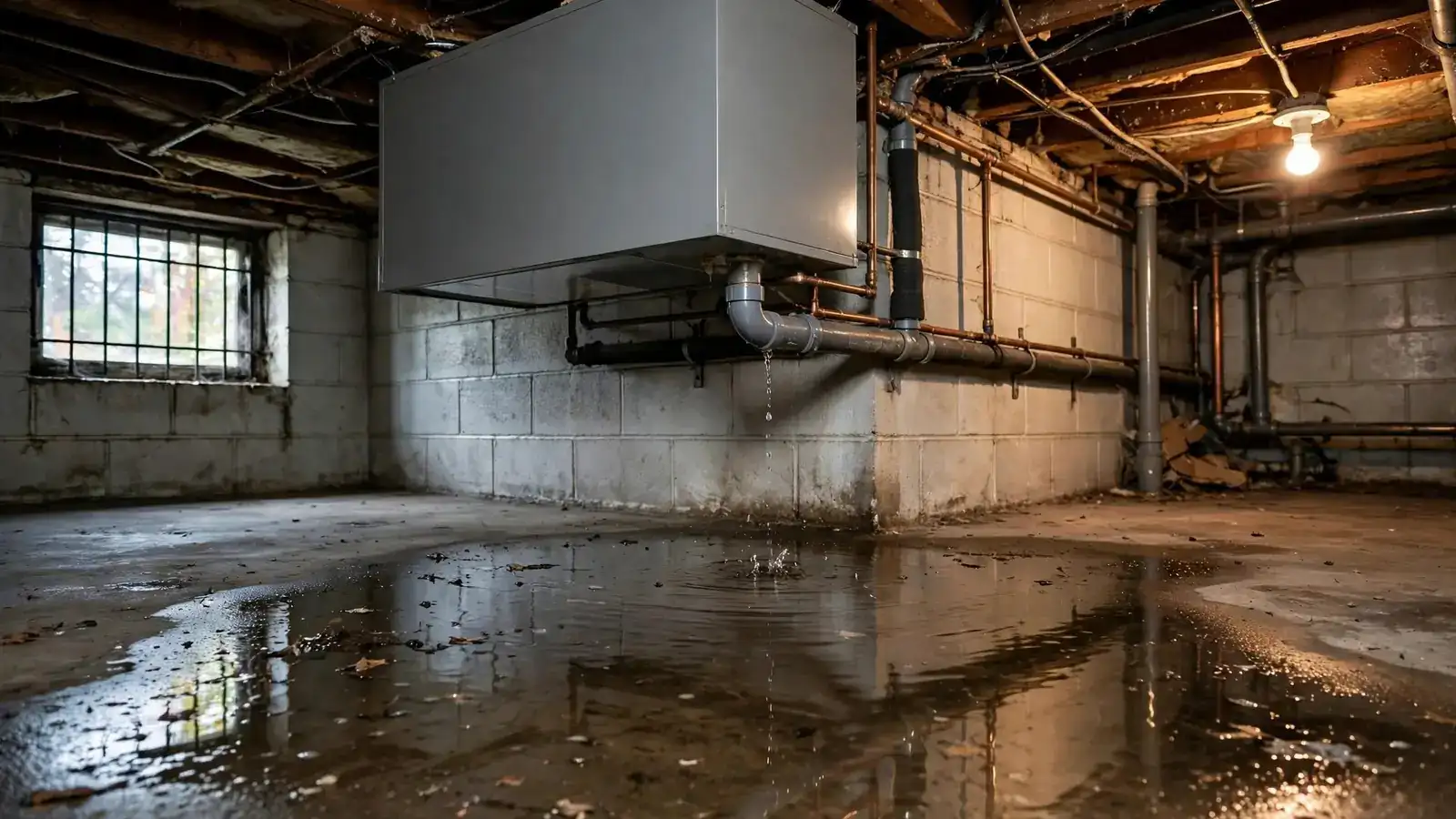
Key facts: AC leaking water
- Air conditioners remove moisture from indoor air, which drains through a condensate line.
- Clogged drain lines are the most common cause of indoor leaks.
- A melting frozen coil can overwhelm the drain pan.
- Moisture left in building materials can lead to mold [1].
Causes
Common causes
Clogged condensate drain
Algae, dust and debris block the line.
Cracked or rusted drain pan
Older pans corrode and leak.
Failed condensate pump
Basement units without floor drains rely on a pump.
Frozen coil melting
More water than the pan can handle.
Disconnected drain line
Joints come apart over time.
Mini-split drain problems
Kinked or clogged lines on wall heads.
First steps
What to do right away
- 1
Shut cooling off first
Stop more water being produced.
- 2
Contain the water
Towels, buckets and a wet-vac.
- 3
Check the float switch
If the system stopped itself, the switch may have tripped.
- 4
Look at the drain line
Visible clogs or disconnections.
- 5
Dry wet areas
Fans and dehumidifiers to prevent mold.
- 6
Call a technician
If you cannot find or clear the cause.
Location
Where the leak shows up
| Where you see water | Likely source |
|---|---|
| Around a basement air handler | Clogged drain or failed pump |
| Ceiling stain below an attic unit | Overflowing pan or clogged secondary drain |
| Dripping down a wall under a mini-split | Clogged or poorly sloped head drain |
| Water by the outdoor unit | Normal condensation or defrost on heat pumps |
| Ice and water at the indoor unit | Frozen coil melting |
Above living spaces
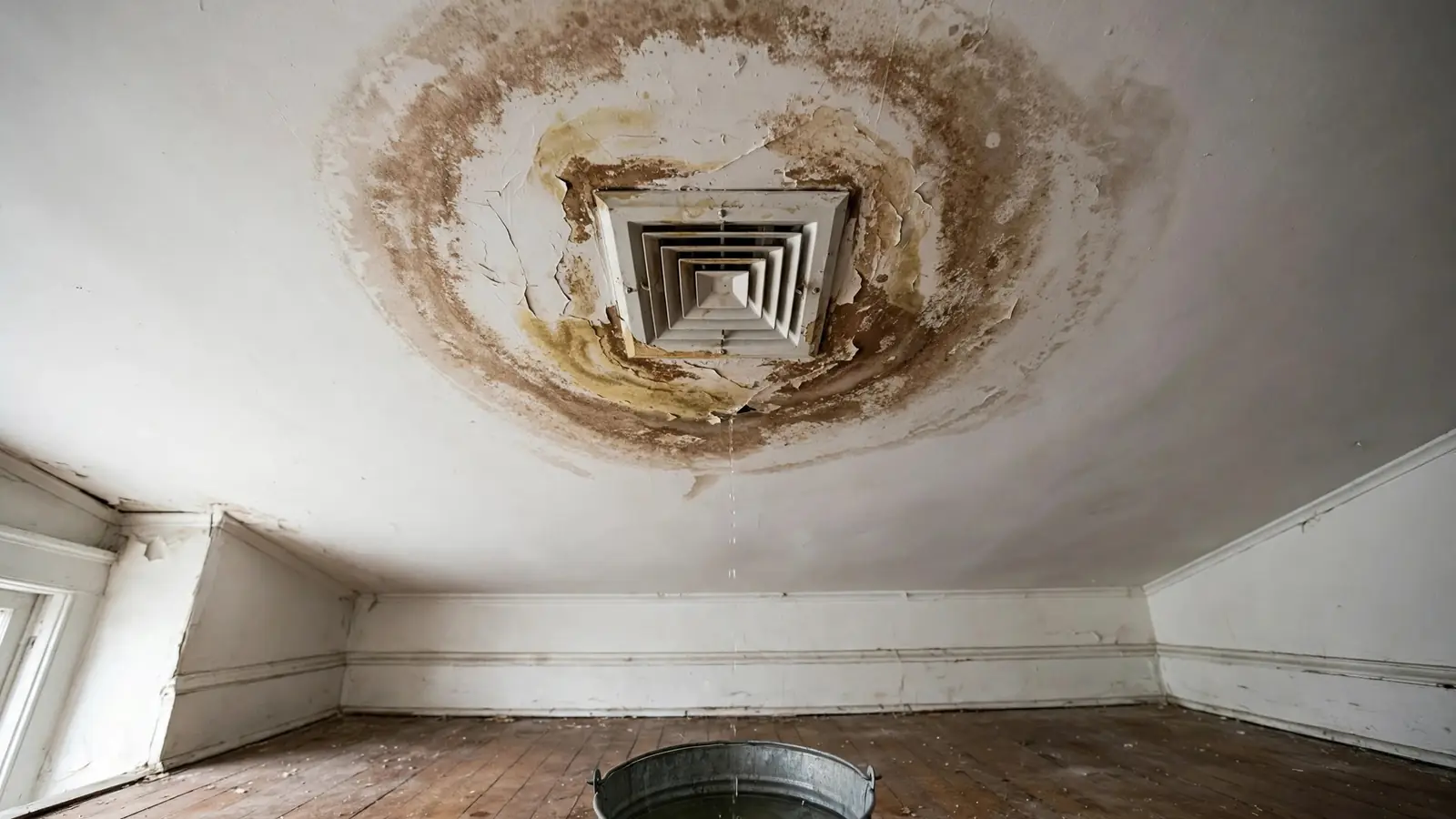
Attic and upper-floor units
In DC rowhouses and detached homes with air handlers in attics or above finished rooms, a leak can damage ceilings below. These units should have a secondary drain pan under the unit and a safety switch that shuts the system off if the pan fills. If you see a ceiling stain, turn off the system and check the pan. Water left in ceilings and insulation can grow mold in humid weather.
Condensation
How much water an AC removes
On a humid DC summer day, a central air conditioner can remove many gallons of water from the air. That water collects on the cold evaporator coil, drips into a pan and flows through a condensate line, usually PVC pipe, to a floor drain, outside or a condensate pump. Because the line carries water constantly, algae and dust grow inside it, especially in warm basements and attics. Over time, the line narrows and eventually clogs.
Prevention
Preventing condensate leaks
Flush the drain line
A technician can clear it during a spring visit.
Keep filters clean
Less dust reaching the coil and pan.
Check pumps
Listen for the pump running and look for leaks.
Inspect pans
Rust or cracks mean replacement.
Mind mini-split lines
Keep them sloped downward and clear.
Install safety switches
Especially on attic units.
Basements
Basement units and condensate pumps
Many DC rowhouse basements have no floor drain near the air handler, so a small condensate pump lifts water to a sink, drain or outside. Pumps have floats and motors that wear out. A failed pump causes water to back up and overflow. If a pump hums constantly, cycles too often or leaks, have it checked. Some pumps include a safety switch that shuts off the AC if the pump fails.
Sweating lines
Leaks from refrigerant lines
Sometimes water appears not from the drain but from the cold refrigerant line sweating in humid air where its insulation is missing or damaged. Drips along a line in a closet or basement can stain ceilings. Replacing damaged insulation stops the sweating. Ice on the line, however, is a different problem; see our frozen coil guide.
Clearing clogs
Clearing a condensate drain
Many drain lines have a cleanout tee near the indoor unit. With the system off, some homeowners pour a cup of white vinegar into the cleanout to slow algae growth, or use a wet-vac at the outside end of the line to pull out a clog. Avoid bleach in lines with metal parts and never force wire through fragile fittings. If the line is buried in walls or the clog returns, a technician can clear and, if needed, reroute it.
Summary
Leak at a glance
| Question | Answer |
|---|---|
| First step | Turn the system off and contain water |
| Most common cause | Clogged condensate drain |
| Other causes | Failed pump, cracked pan, frozen coil |
| Risk | Ceiling and floor damage, mold |
| Prevention | Annual drain cleaning, safety switches |
Renters
Renters and condo owners
In rentals, report AC leaks to the landlord in writing right away, especially if water reaches ceilings or neighboring units. In condos, a leak from your unit's air handler can damage the unit below, so act quickly and notify building management. Insurance may be involved if damage spreads.
Climate
Leaks and the DC climate
Because DC summers are humid, air conditioners remove more water here than in dry climates. Systems that run long hours during heat waves send a steady stream of condensate through drains. That is why drains clog more often in July and August and why spring maintenance that includes flushing the drain line is worthwhile. Basements and attics that stay warm and damp encourage algae inside lines.
Early signs
Signs of a slow condensate problem
- Water in the secondary panThe primary drain is struggling.
- Musty smell near the unitStanding water or algae.
- Gurgling from the drainPartial clog.
- Condensate pump runs constantlyPump or line problem.
FAQ
Leaking water questions
Is water around my AC normal?
Outside, often yes. Inside, it means a drain or pan problem.
Can I clear the drain myself?
Some homeowners flush accessible lines; a technician can clear stubborn clogs.
Why does my mini-split drip?
The head's drain line may be clogged, kinked or not sloped correctly.
Will a leak cause mold?
It can if materials stay wet. Dry them quickly.
How much water does an AC remove?
On humid days, many gallons, which must drain away properly.
Why does my basement AC have a pump?
If there is no floor drain nearby, a pump lifts condensate to a drain.
Why is my refrigerant line dripping?
If its insulation is damaged, it can sweat in humid air.
Can vinegar keep my drain line clear?
Some technicians recommend it for slowing algae growth in accessible lines, with the system off.
What if my AC leak damaged the condo below?
Stop the leak, notify management and your insurer promptly.
Why does my AC leak more in August?
Long run times in humid weather produce more condensate, and drains clog faster.
Is a leaking AC dangerous?
Water near electrical parts is a risk. Turn the system off and dry the area.
Can a clogged drain stop cooling?
Yes, if a float switch shuts the system off.