
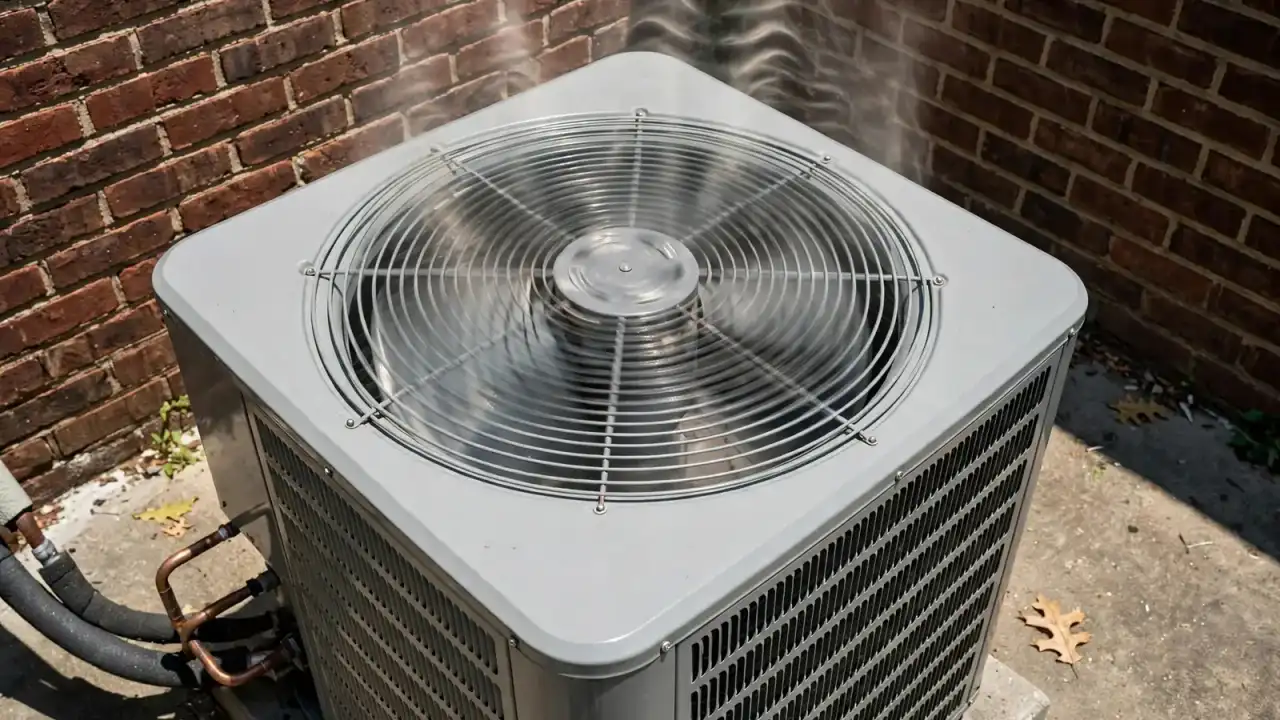
Key facts: Short cycling AC
- Short cycling means the system starts and stops more often than it should.
- Oversized systems cool quickly but remove less moisture, leaving rooms clammy [1].
- Frequent starts are hard on the compressor.
- Thermostat placement near heat sources or supply vents can trigger short cycles.
Causes
Common causes
Oversized system
Cools the thermostat area too quickly.
Thermostat location
Near a supply vent, window or kitchen.
Dirty filter or coil
Overheating or freezing triggers safety shutoffs.
Low refrigerant
Pressure switches stop the compressor.
Electrical faults
Failing capacitor, contactor or control board.
Blocked outdoor unit
High pressure trips the system.
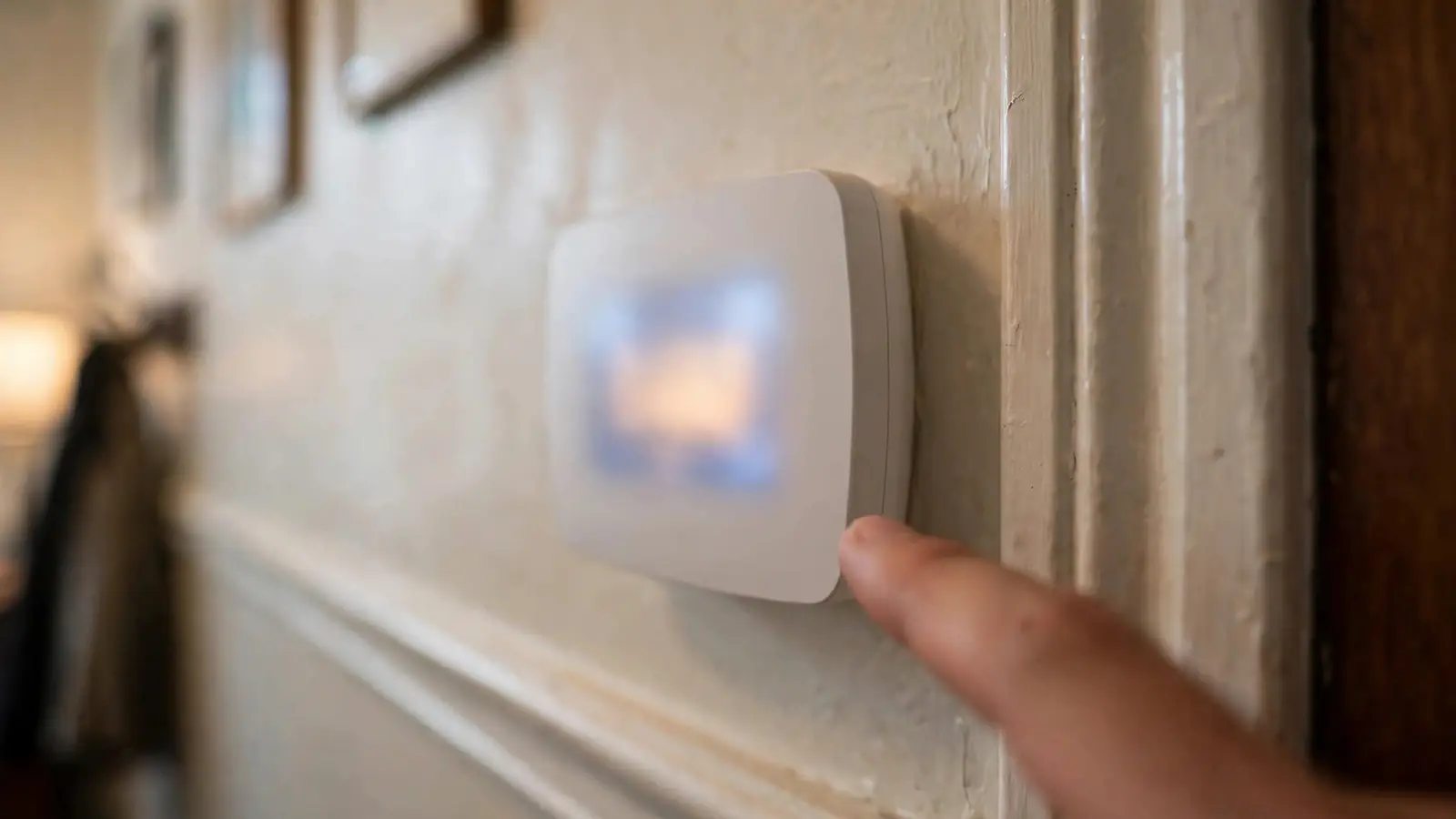
Before calling
Checks you can do
- 1
Time the cycles
Note how long it runs and how long it rests.
- 2
Check the filter
Replace if dirty.
- 3
Look at the thermostat location
Sun, vents or lamps nearby?
- 4
Check thermostat settings
Some have cycle-rate settings.
- 5
Clear the outdoor unit
Remove debris and plants nearby.
Remedies
Cause and remedy
| Cause | Usual remedy |
|---|---|
| Oversized equipment | Settings changes, or right-size at replacement |
| Thermostat in a bad spot | Relocate the thermostat |
| Dirty filter or coil | Replace filter, clean coil |
| Low refrigerant | Find and fix leak, recharge |
| Electrical fault | Replace failing part |
Humidity
Why it matters in DC summers
In DC's humid summers, an air conditioner needs to run long enough to pull moisture from the air. Short cycles leave the house cool but sticky, which often leads people to lower the thermostat further, making cycling worse. Fixing the cause improves comfort and efficiency.
Normal cycles
What a normal cycle looks like
On a hot afternoon, a correctly sized air conditioner may run for long stretches, sometimes nearly continuously, while in milder weather it runs in cycles of perhaps 15 to 20 minutes with rests in between. Variable-speed and inverter systems may run almost all the time at low speed, which is normal for them. Short cycling is when a single-stage system runs only a few minutes at a time, several times an hour, without reaching steady operation.
Oversizing
Oversizing in older homes
Oversizing is common when an installer simply matches the old unit or sizes by floor area. Older DC homes that have been insulated, had windows replaced or been air sealed need less cooling than before, so the original equipment size may now be too large. Rowhouses benefit from shared walls that reduce heat gain. A load calculation at replacement time prevents oversizing. Until then, settings such as lower blower speed or thermostat cycle rate adjustments may help.
Mechanical causes
Electrical and refrigerant causes
Failing capacitor
Compressor starts and stops on overload.
Bad contactor
Intermittent power to the outdoor unit.
Low refrigerant
Low-pressure switch stops the compressor.
Overcharge
High-pressure switch trips.
Dirty condenser coil
High pressure on hot days.
Control board faults
Erratic signals to the equipment.
Thermostat
Thermostat placement
Thermostats should be on an interior wall, away from direct sun, supply vents, lamps, kitchens and drafts. In many DC rowhouses, thermostats sit in hallways near stairs, where air moves between floors and temperatures change quickly. A thermostat hit by cold air from a nearby vent will think the house is cool and stop the system early. Relocating it, or using remote sensors with a smart thermostat, can solve short cycling without touching the equipment.
Diagnosis
What a technician checks
- 1
Cycle timing
How long the system runs and rests.
- 2
Thermostat
Location, settings and wiring.
- 3
Airflow
Filter, coil and blower.
- 4
Refrigerant pressures
Low or high charge.
- 5
Electrical parts
Capacitor, contactor and boards.
- 6
System size
Compared with a load estimate.
Effects
Effects of short cycling
Short cycling hurts comfort and equipment life. Each start puts electrical and mechanical stress on the compressor and contactor. Short runs remove less moisture, so rooms feel clammy. Temperatures swing between too cool near the thermostat and warm elsewhere. Energy use rises because systems are least efficient in their first minutes of each cycle.
Summary
Short cycling at a glance
| Question | Answer |
|---|---|
| What it is | Many short on-off cycles per hour |
| First checks | Filter, thermostat location and settings |
| Common causes | Oversizing, refrigerant, electrical faults |
| Risk | Compressor wear, humidity, energy use |
| Long-term fix | Correct the cause; right-size at replacement |
Heat pumps
Short cycling in heat pumps and mini-splits
Heat pumps can short cycle in both heating and cooling. In winter, frequent cycling may involve the defrost controls or backup heat staging. Mini-splits with inverter compressors normally adjust speed rather than cycling on and off; repeated stops may show error codes that point to sensors, refrigerant or boards. Note any codes before calling.
Settings
Settings that may help
Some thermostats let you adjust the cycle rate or temperature differential, which controls how far the temperature drifts before the system starts again. A small increase in the differential can reduce short cycles caused by thermostat sensitivity. Some air handlers have blower speed or dehumidification settings that lengthen run times. A technician should make these adjustments, since changes can affect comfort and equipment.
Oversizing clues
Signs your system may be oversized
- Cools fast, then shuts offReaches setpoint in a few minutes.
- Clammy roomsNot enough time to dehumidify.
- Large temperature swingsRooms cool quickly then warm up.
- Noisy startsFrequent compressor starts are noticeable.
After service
Short cycling after a repair
If short cycling started after a repair, mention it. An overcharged or undercharged system, a replacement part with the wrong rating, or a thermostat reconnected incorrectly can all cause it. A follow-up visit to check pressures and settings usually sorts it out.
Rowhouses
Short cycling and humidity in rowhouses
In rowhouses with a single thermostat on the middle floor, the system may satisfy that floor quickly while the top floor stays warm and the basement stays cool and damp. Short cycles make this worse. Zoning, a second system for the top floor or remote sensors can balance comfort.
FAQ
Short cycling questions
How long should my AC run each cycle?
On a warm day, typically 15 minutes or more.
Can a new AC short cycle?
Yes, if it is oversized or the thermostat is poorly placed.
Is short cycling bad for the compressor?
Yes. Frequent starts cause extra wear.
Can a thermostat cause short cycling?
Yes, through placement, settings or faults.
Do inverter systems short cycle?
They usually run longer at low speed, which is normal. Rapid on-off can still indicate a fault.
Can moving the thermostat fix short cycling?
Sometimes, if it sits near a vent, sun or other heat source.
Can low refrigerant cause short cycling?
Yes. Low-pressure switches can stop the compressor repeatedly.
Do heat pumps short cycle in winter?
They can. Defrost controls or staging settings may be involved.
Can a thermostat setting reduce short cycling?
Sometimes. Cycle rate or differential settings can help; ask a technician.
Why did short cycling start after my AC was serviced?
Charge, part ratings or thermostat wiring may need checking.
Will a second system help my rowhouse?
For larger homes, separate systems or zoning often balance top and lower floors.