
Key facts: AC frozen coil
The cause
Why a coil freezes
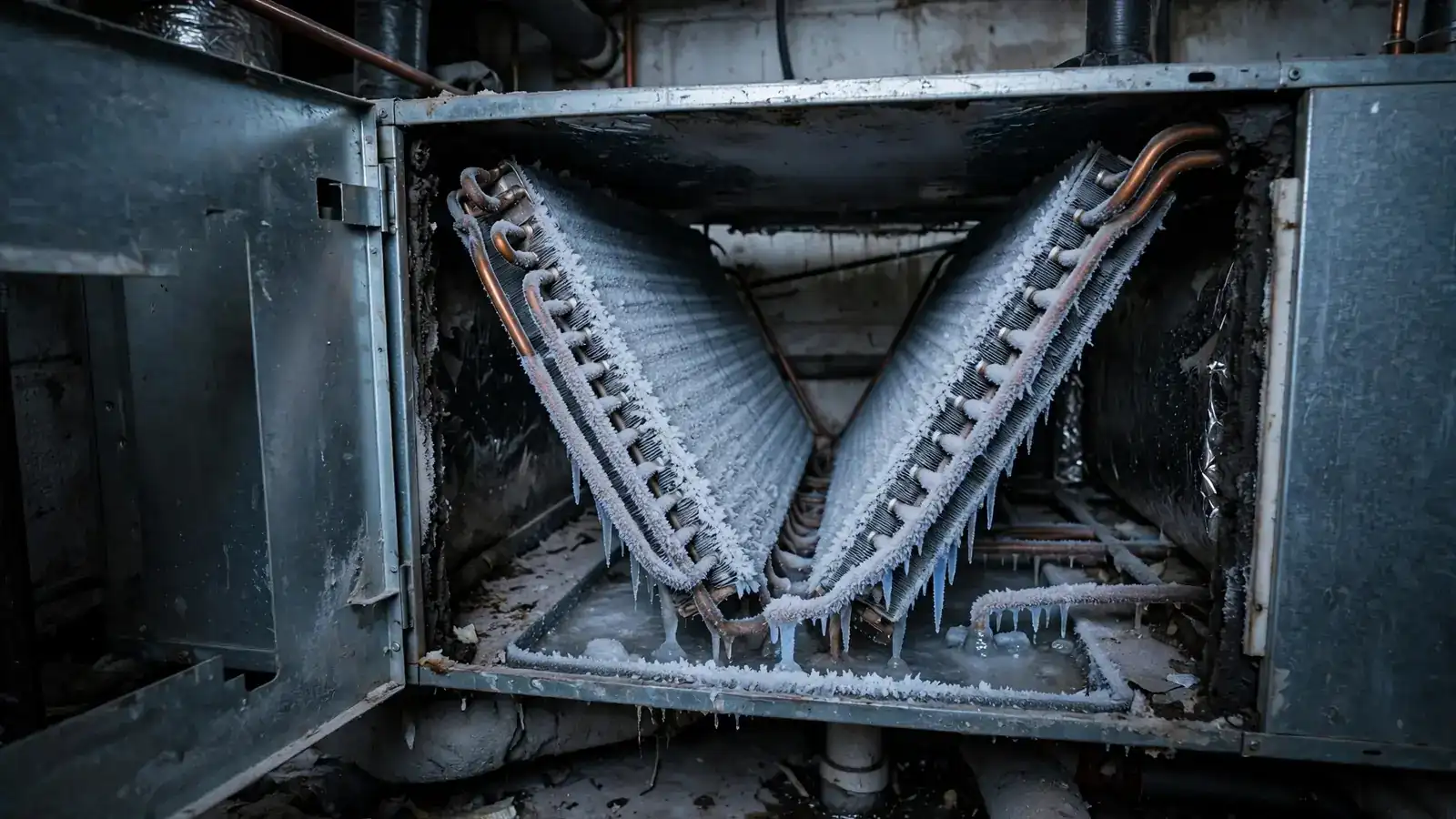
The evaporator coil normally runs just above freezing. Warm indoor air moving across it keeps it from getting colder. If not enough air moves across the coil, or if there is too little refrigerant, the coil temperature drops below freezing. Moisture from the air freezes on the fins, the ice blocks more airflow and the problem builds on itself until the coil is a block of ice.
Causes
Common causes
Dirty filter
The most common cause of low airflow.
Closed or blocked vents
Too many registers closed.
Dirty evaporator coil
Dust and grime restrict airflow.
Blower problem
Weak motor, failed capacitor or wrong speed.
Low refrigerant
A leak lowers coil temperature.
Running in cool weather
Using AC on cool nights can freeze some systems.
What to do
How to thaw safely
Never chip at the ice; it can damage the coil.
- 1
Turn cooling off
Set the thermostat to Off.
- 2
Run the fan
Set the fan to On to speed thawing.
- 3
Protect floors
Place towels or a pan for meltwater.
- 4
Replace the filter
If it is dirty.
- 5
Wait
Thawing can take several hours.
- 6
Restart and watch
If ice returns, call a technician.
Next steps
If ice comes back
| Check | Why |
|---|---|
| Airflow | Filter, coil, blower and ducts |
| Refrigerant charge | Low charge means a leak |
| Blower speed | Set correctly for the system |
| Drain and pan | Meltwater must drain away |
| Thermostat settings | Avoid very low setpoints |
Signs
Spotting a frozen coil
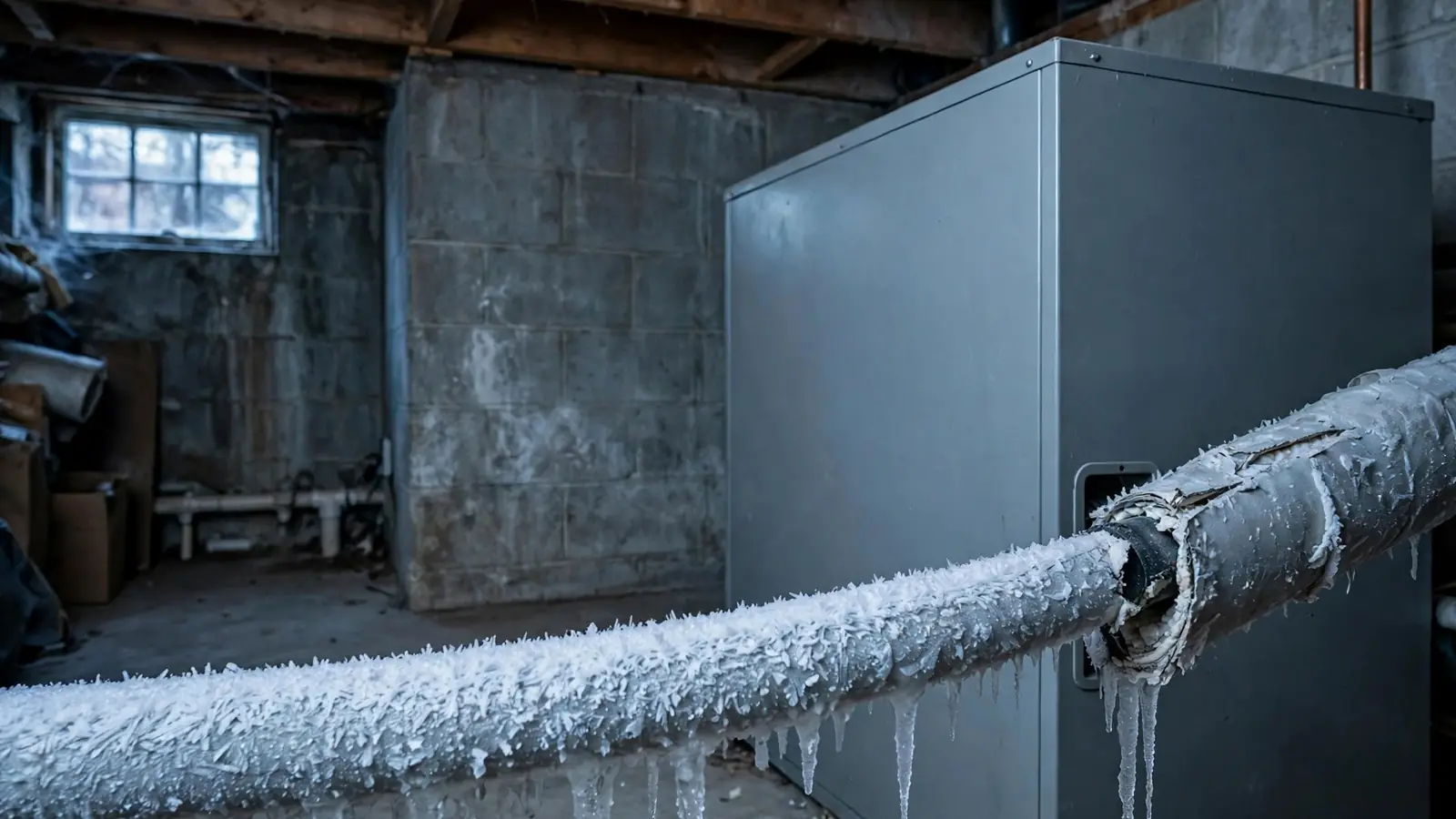
You may not see the coil itself, since it sits inside the air handler. Signs include ice or frost on the larger, insulated refrigerant line where it enters the indoor unit or along the line at the outdoor unit, weak airflow from vents, water dripping or pooling around the indoor unit, and the system running constantly without cooling. In mini-splits, frost may appear on the indoor head's coil behind the louvers.
Local factors
Why it happens more in some DC homes
Rowhouses with small return grilles, closed-off rooms or undersized ducts can starve the coil of air. Basement air handlers in dusty unfinished basements clog filters and coils faster. Renovation dust is another culprit: drywall and plaster dust from a remodel can coat a coil quickly if the system runs during the work. Cover returns during renovations and change filters afterward.
Prevention
Habits that prevent freezing
Change filters often
Monthly checks in summer.
Keep vents and returns open
Avoid closing many registers.
Avoid very low setpoints
Extreme settings increase run time without faster cooling.
Annual coil check
Technicians can clean dirty coils.
Protect during renovation
Cover returns and run the system less.
Fix leaks promptly
Low refrigerant leads to icing.
Heat pumps
Heat pumps in winter versus summer
Heat pumps naturally collect frost on their outdoor coil in winter and clear it with defrost cycles. That is different from a frozen indoor coil in summer. If a heat pump's outdoor unit is encased in thick ice in winter, see our heat pump repair page. If the indoor coil freezes in summer, the causes are the same as for any air conditioner: airflow and refrigerant.
Risks
What happens if you ignore a frozen coil
Running a system with a frozen coil means it cannot cool, uses electricity without benefit and can send liquid refrigerant back toward the compressor, which is designed to pump gas. That can damage valves inside the compressor. Meltwater can also overflow the pan and damage ceilings or floors. Turning the system off at the first sign of ice protects the equipment and your home.
Summary
Frozen coil at a glance
| Question | Answer |
|---|---|
| First step | Turn cooling off, fan on |
| Most common cause | Dirty filter |
| Other causes | Dirty coil, blower issue, low refrigerant |
| Thaw time | Often several hours |
| Call when | Ice returns after a new filter |
Airflow
Checking airflow yourself
Besides the filter, look at return grilles: are they blocked by furniture or rugs? Are most supply registers open? Is the blower running when the system calls for cooling? If airflow from vents seems weak even with a new filter, the coil may be dirty, the blower may be failing or ducts may be restricted. These need a technician.
Urgent signs
When to call right away
- Ice returns quicklyPoints to refrigerant or blower problems.
- Water damageOverflowing pans or wet ceilings.
- Burning smellElectrical issue.
- Compressor noiseUnusual sounds from the outdoor unit.
Mini-splits
Mini-split heads that freeze
Ductless heads freeze for the same reasons as central coils: dirty filters, blocked airflow or low refrigerant. Because their filters sit just behind the front panel and catch a lot of dust, they need cleaning often, sometimes monthly in summer. If you see frost on the coil behind the louvers, switch the head to fan mode or off, clean the filters and let it thaw. Recurring frost suggests a refrigerant leak, often at a flare joint.
Clues
Signs it is low refrigerant, not airflow
- New filter did not helpAirflow is probably fine.
- Ice on the outdoor line tooLow charge likely.
- Gradual loss of cooling over weeksSlow leak.
- Recharged beforeThe leak was never fixed.
FAQ
Frozen coil questions
Is ice on my AC lines dangerous?
It is a sign of a problem. Turn off cooling and let it thaw.
How long does it take to thaw?
Often several hours, depending on how much ice built up.
Can I use a hair dryer to thaw it?
It is better to let it thaw with the fan running. Avoid heat guns and chipping.
Will it freeze again?
If the cause is not fixed, yes.
Can renovation dust freeze my AC coil?
Yes. Dust can clog filters and coils quickly. Cover returns and change filters after work.
Is frost on my heat pump in winter the same problem?
No. Outdoor frost in winter is normal and cleared by defrost cycles.
Should I close vents in unused rooms?
Closing many vents can reduce airflow and contribute to freezing.
Can a frozen coil damage my compressor?
Yes, if the system keeps running. Turn it off and let it thaw.
Do return grilles affect freezing?
Blocked returns reduce airflow and can contribute to freezing.
How often should mini-split filters be cleaned?
Often monthly in heavy summer use.
Should I turn off the breaker when the coil is frozen?
Turning cooling off at the thermostat is enough; leave the fan running to thaw.
Can a frozen coil cause a leak?
Yes. Meltwater can overflow the drain pan.