
Key facts: Chevy Chase DC
- Chevy Chase DC developed in the early twentieth century as a streetcar suburb in upper Northwest Washington [1].
- Most homes are detached houses on individual lots with yards and mature trees.
- Many homes have two systems: a basement furnace with AC coil and an attic air handler.
- Attic air handlers need secondary drain pans and safety switches to protect ceilings.
- The covered ZIP code for Chevy Chase DC on this line is 20015.
Coverage
Chevy Chase DC ZIP codes served
Calls from these Chevy Chase DC ZIP codes can reach an independent HVAC technician who works there.
- 20015Chevy Chase DC and neighboring upper Northwest streets near Connecticut Avenue and the Maryland line.
About Chevy Chase DC
A streetcar suburb of detached houses
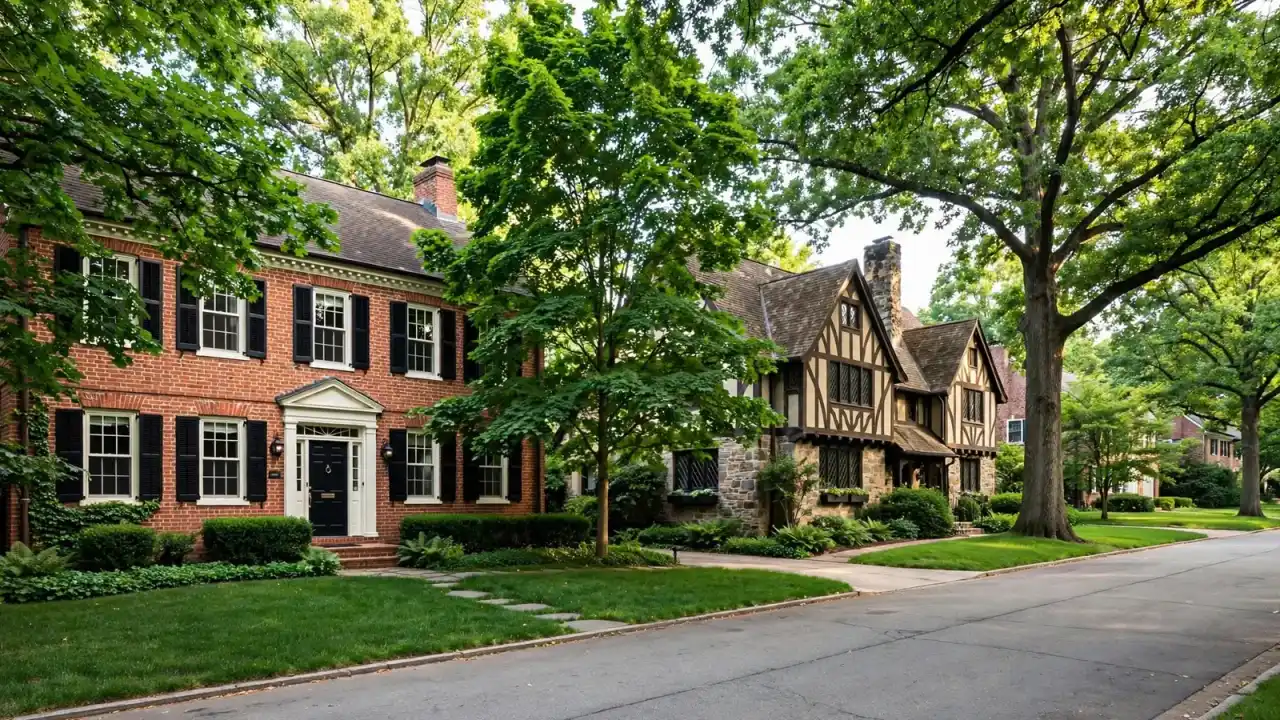
Chevy Chase DC grew in the early twentieth century along Connecticut Avenue, where a streetcar line connected upper Northwest to downtown. Developers built detached houses on generous lots: brick and frame colonials, Tudors with steep roofs, foursquares and bungalows, set back behind lawns under large oaks and maples. The neighborhood sits just south of Chevy Chase, Maryland, and shares its name and much of its character.
Systems
How Chevy Chase homes are cooled
Basement furnace with AC coil
Serving the first floor and basement.
Unit under the roof
Serving the second floor.
Ground-level condensers
In side or rear yards.
Heat pumps
Replacing older AC and sometimes furnaces.
Mini-splits
In finished attics, additions and sunrooms.
High-velocity systems
In some older homes without ducts.
Two systems
Two-system homes
Most larger Chevy Chase houses have two systems. The first floor is served by a gas furnace in the basement with an air conditioning coil on top and an outdoor condenser in the yard. The second floor is served by an attic air handler with its own condenser. Each has its own thermostat, filter, breaker and drain. Upstairs systems usually work harder because of attic heat and roof sun, and they often reach the end of their lives first.
Problems
Common Chevy Chase AC problems
| Problem | Likely cause | Usual approach |
|---|---|---|
| Ceiling stain upstairs | Attic drain clog or pan overflow | Clear drain, safety switch |
| Upstairs warm | Attic heat, duct leaks, aging system | Seal and insulate, repair or replace |
| Yard condenser struggling | Leaves, shrubs, age | Clean, clear, repair |
| Basement coil leaking water | Drain clog above the furnace | Clear drain, protect furnace |
| Old R-22 system | Limited refrigerant, age | Consider replacement |
| Dual-fuel control issues | Changeover settings | Adjust controls |
Before you call
First checks for a Chevy Chase home
- 1
Which floor is affected
Upstairs or downstairs system.
- 2
Thermostat
The one for that floor.
- 3
Filter
Basement furnace or attic unit.
- 4
Breakers
Each system and each condenser.
- 5
Yard units
Fans spinning, coils clear.
- 6
Water
Attic pan, ceilings, around the furnace.
Trees
Mature trees and yard units
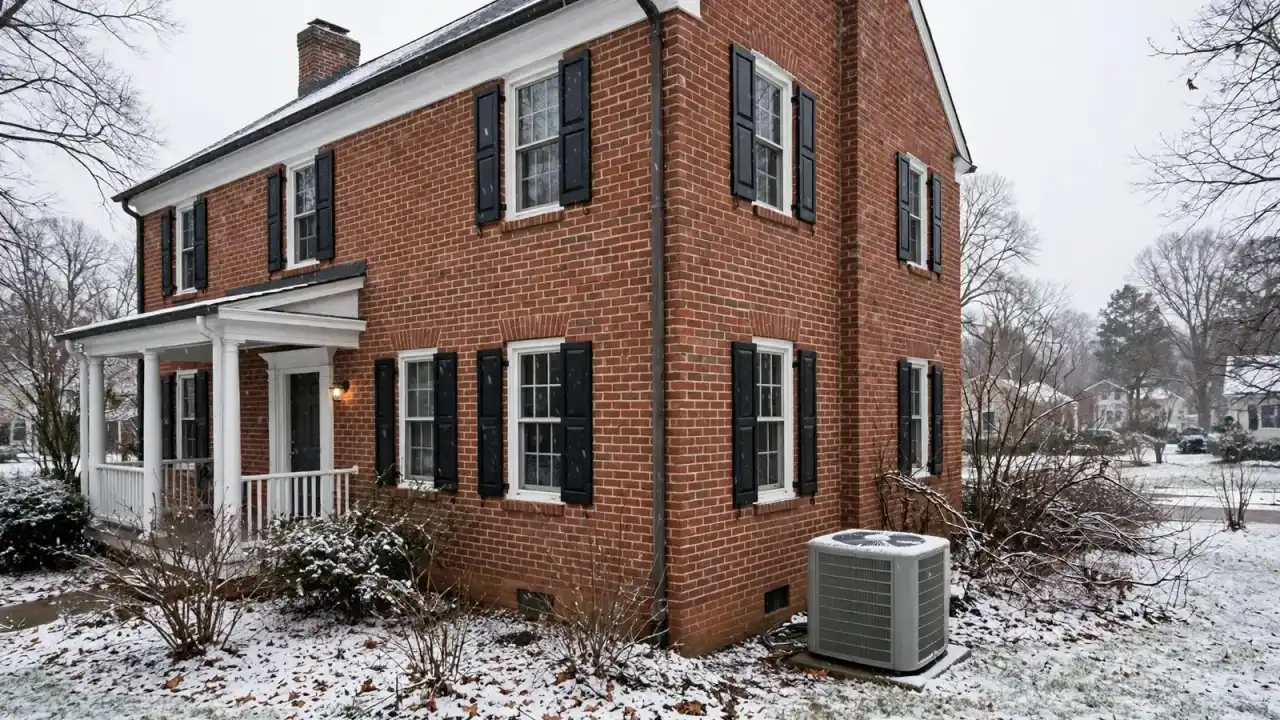
Chevy Chase's mature trees shade houses and streets but drop leaves, seeds and pollen on condensers each spring and fall. Roots and shrubs crowd units placed along side yards, and gutters overflowing above units can soak them.
Keep two feet clear around each condenser, rinse coils gently with the power off and clear leaves in autumn. If a large limb hangs over a unit, consider trimming it to avoid damage in storms.
- Shade helps houses
- Leaves clog coils
- Keep shrubs back
- Trim limbs over units
Attics
Attics in colonials and Tudors
Colonial attics are usually roomy enough for an air handler on a platform, reached through a pull-down ladder or stair. Tudors, with steep roofs and dormers, often have tighter attic spaces and knee walls. In both, attics get very hot in summer, so ducts must be sealed and insulated and the air handler must have a secondary drain pan with a float switch. When replacing an attic unit, installers check whether the access opening fits the new equipment and whether the platform and pan need upgrading. Some owners move upstairs air handlers into a closet to avoid attic heat.
Basements
Basement furnaces and cooling coils
Downstairs systems in Chevy Chase houses are typically gas furnaces with an evaporator coil mounted on top. The furnace blower moves air for both heating and cooling. That means a furnace blower, control board or door switch problem can stop air conditioning. The coil's drain must be kept clear, since overflow drips into the furnace. Annual service should cover both the cooling side and the furnace, including combustion safety and carbon monoxide checks.
Decisions
Repair or replace in two-system homes
| Situation | Typical approach |
|---|---|
| Upstairs system old, downstairs newer | Replace upstairs first |
| Both on R-22 | Plan staged replacement |
| Furnace old, AC newer | Consider heat pump with furnace backup |
| Frequent attic leaks | Upgrade pan, drain and safety switch |
| Upstairs never comfortable | Duct improvements or additional capacity |
Heat pumps
Switching to a heat pump
Many Chevy Chase owners replacing an older air conditioner now choose a heat pump. Paired with the existing gas furnace in a dual-fuel setup, the heat pump handles cooling and most heating, with the furnace taking over on the coldest days. Others go fully electric with cold-climate heat pumps and electric backup. Electrical service capacity, outdoor unit placement and thermostat setup all need attention. A technician can explain options for your house.
Maintenance
A spring tune-up for two systems
- 1
Both thermostats
Check operation and settings.
- 2
Both filters
Replace.
- 3
Both drains
Flush and test safety switches.
- 4
Both condensers
Clean coils, check capacitors.
- 5
Refrigerant
Check charge on each system.
- 6
Attic
Look at ducts, pan and insulation.
Apartments
Connecticut Avenue and apartment buildings
Along Connecticut Avenue, Chevy Chase DC has mid-century apartment buildings and co-ops, plus shops and the Chevy Chase Circle area. Many of these buildings use through-wall units, window units or building systems with fan-coils served by central chillers and boilers. Residents in rentals contact management; co-op and condo owners follow building rules on equipment and contractors. Issues in fan-coil buildings often involve the unit's fan, filter, valves or drain, while the chilled water itself is the building's responsibility.
Third floors
Finished attics and third floors
Many Chevy Chase houses have finished attics used as bedrooms or offices, often under sloped ceilings with knee walls. These rooms are the hardest in the house to cool because they sit directly under the roof. Ducts from an attic air handler in the knee-wall space may be leaky and uninsulated. A dedicated mini-split head, better roof insulation and sealing knee-wall ducts are the most effective fixes. Opening an extra supply register rarely solves it alone.
Choosing help
Questions to ask a Chevy Chase technician
Will you service both systems?
Upstairs and downstairs.
Do you check the furnace side too?
Blower, controls, combustion.
Can you test my attic safety switch?
Protects ceilings.
Do you install dual-fuel heat pumps?
Common upgrade path.
Will you check attic duct leakage?
Major comfort factor.
What DC credentials do you hold?
DLCP license and EPA certification.
Older systems
Older systems and refrigerant
Systems installed in the 1990s and 2000s in many Chevy Chase houses still use R-22. Repairing leaks on these depends on reclaimed refrigerant, and major failures often lead to replacement. When one system is replaced, owners sometimes keep the other running for a few more years, then replace it later. New systems use refrigerants allowed under federal HFC rules, and the newest use A2L refrigerants handled by trained installers.
Additions
Additions, sunrooms and kitchens
Chevy Chase houses have been expanded over the decades with family rooms, kitchen extensions, sunrooms and rear additions. These spaces are often far from the original ducts, have large windows and sometimes vaulted ceilings. The main systems may not reach them well. A ductless mini-split or a separate small system is a common solution. If an addition has its own system, it has its own filter, drain and condenser to maintain.
Basements
Basement finishing and humidity
Finished basements in older Chevy Chase houses are used as playrooms, offices and guest rooms. Basements stay cool but humid in summer. If the downstairs system serves the basement, it may overcool it while trying to cool the first floor. Balancing dampers, separate zones or a dedicated dehumidifier help. Basement air handlers and furnaces need clearance for service, which renovations sometimes forget.
Summary
Chevy Chase AC at a glance
| Topic | What to know |
|---|---|
| Housing | Detached colonials, Tudors, bungalows |
| Systems | Basement furnace with coil, attic air handler |
| Common issues | Attic heat, drains, aging systems |
| Upgrades | Heat pumps, dual fuel, mini-splits for additions |
| Prevention | Spring service on both systems, safety switches |
Replacement planning
Planning replacement in a two-system home
- 1
Note ages
Model and serial numbers show dates.
- 2
Compare comfort
Which floor has problems.
- 3
Check refrigerant type
R-22 systems first.
- 4
Consider heat pumps
With or without furnace backup.
- 5
Plan timing
Spring or fall to avoid peak season.
- 6
Get a load calculation
Size each system correctly.
Radiator homes
Radiator homes and high-velocity cooling
Some Chevy Chase houses, especially older colonials and Tudors, still heat with hot-water or steam radiators and never had ducts. Owners adding cooling often choose small-duct high-velocity systems, which thread flexible tubes through walls and floors from an attic or basement air handler, or ductless mini-splits. High-velocity systems are discreet and dehumidify well but must be balanced to avoid drafts and noise. Mini-split heat pumps can also take over much of the heating, reducing boiler use.
Storms
Storms and big trees
Upper Northwest's big oaks and tulip poplars can drop large limbs in summer thunderstorms, sometimes onto outdoor units, line sets or the electrical feed to the condenser. After a storm, look at each unit for damage and check breakers if the system does not restart. Bent fins can be straightened by a technician; crushed coils or damaged lines need repair. Pepco handles damaged power lines.
Typical repairs
Common Chevy Chase repairs
Attic drain clearing
And safety switch tests.
Capacitors and contactors
Yard units after heat waves.
Coil cleaning
Leaves and pollen.
Furnace blower service
Affects downstairs cooling.
Duct sealing
Attic and knee walls.
Leak repair or replacement
Older systems.
Long-time owners
Older residents and long-time owners
Many Chevy Chase homes have been owned by the same families for decades. Systems in these homes may be well maintained but old. Family members helping older relatives can make a difference by scheduling spring service, changing filters, checking that thermostats are easy to use and planning replacements before a failure in July.
Noise
Quieter yards
Detached lots give more room than rowhouse neighborhoods, but side yards are often narrow, and condensers placed along them sit near neighbors' windows and patios. Older single-speed condensers can be loud. When replacing equipment, modern variable-speed units, sound blankets and placement away from bedrooms reduce noise. Vibration pads and secure mounting prevent hum carrying into the house.
Electrical
Electrical service for heat pumps
Switching from gas heating to heat pumps, or adding electric backup heat, increases electrical load. Older Chevy Chase houses may have services that were upgraded once decades ago. A licensed electrician should confirm capacity before installing heat pumps with electric backup, and may suggest a load calculation or service upgrade. Dual-fuel systems that keep the gas furnace for backup avoid much of that extra load.
Seasons
Chevy Chase seasonal checklist
- SpringService both systems; clear attic and furnace-top drains.
- Early summerClear pollen and seeds from condensers.
- SummerMonthly filter checks; watch upstairs ceilings.
- FallClear leaves; check heat pumps and furnace.
- WinterKeep heat pumps above snow and away from gutter drips.
Summary
Chevy Chase DC in short
Expect two systems: a basement furnace with a cooling coil and an attic air handler upstairs, each with its own condenser in the yard. Protect ceilings and the furnace with clear drains and safety switches, keep yard units free of leaves, seal and insulate attic ducts, and plan replacements one system at a time, often moving to heat pumps.
Climate
Summer in upper Northwest
Upper Northwest has more tree cover and green space than central DC, which helps keep streets a little cooler, but summers are still hot and humid, with frequent days in the 90s. Large two-story houses with attics absorb a lot of heat through their roofs. The upstairs system often runs for long stretches on hot afternoons, so its capacitor, fan motor and drain take the most strain. A spring check focused on the upstairs system pays off.
Real estate
Selling or buying a house
When Chevy Chase houses change hands, the age and condition of two HVAC systems is a common inspection topic. Buyers should ask for service records, system ages and refrigerant types. Sellers can help by having both systems serviced, keeping records and repairing obvious issues such as missing safety switches or clogged drains. Home inspectors note visible problems but do not usually test refrigerant charge; a separate HVAC inspection gives a fuller picture.
Before calling
Details that speed up the call
Which system
Upstairs, downstairs or addition.
Type
AC, heat pump or dual fuel.
Age
From the unit label if you can.
Checks already done
Filter, thermostat, breakers.
Symptoms
Warm air, water, noise or no power.
Outbuildings
Garages, porches and outbuildings
Some Chevy Chase properties have detached garages, carriage houses or home offices in the yard. These may have their own window units or mini-splits, separate breakers and sometimes separate electrical feeds. If you are adding cooling to an outbuilding, a single-zone mini-split heat pump is usually the simplest choice, providing heat in winter as well. Screened porches converted to sunrooms often need the same approach.
Controls
Thermostats in two-system homes
With two systems, thermostat settings interact. If the upstairs thermostat is set much lower than the downstairs one, cool air sinking down the stairs can make the downstairs system run less while the upstairs system works constantly. Setting both within a degree or two of each other usually balances comfort. Smart thermostats with remote sensors can help, but each system still needs its own controller.
Filtration
Air quality and filters
Central systems in larger houses can use higher-efficiency filters, which capture more pollen and dust from the neighborhood's many trees. Thicker media filters in a proper cabinet allow good filtration without choking airflow. Very restrictive filters in thin slots can reduce airflow and freeze coils, so ask a technician which filter your system can handle.
FAQ
Chevy Chase DC AC questions
Why does my upstairs system fail more often?
Attic heat and roof sun make it work harder.
Can water from my AC damage my furnace?
Yes, if the coil drain above the furnace clogs.
Should I replace both systems at once?
Not necessarily; many owners replace the older one first.
Is a heat pump good for a Chevy Chase house?
Many owners choose heat pumps, often with the furnace as backup.
How do I protect my ceilings from attic leaks?
Secondary drain pans with safety switches and annual drain cleaning.
Can my finished attic get its own cooling?
Yes, a mini-split is a common solution.
Why do my condensers get so dirty?
Mature trees drop leaves and seeds on them.
Who licenses technicians in DC?
DC's Department of Licensing and Consumer Protection licenses them. [4]
Can a furnace problem stop my AC?
Yes, if the furnace blower moves air for cooling.
Should I move my attic air handler?
Sometimes moving it to a closet avoids attic heat; it depends on the house.
Is dual fuel a good option?
Many owners pair a heat pump with their existing furnace.
How do I cool a finished attic?
A dedicated mini-split, better roof insulation and sealed knee-wall ducts are most effective.
Who fixes the fan-coil in my apartment?
Usually building maintenance or the unit owner, depending on the building.
Should my addition have its own system?
Often, if the main ducts cannot reach it well. A mini-split is common.
Why is my finished basement too cold?
The downstairs system may overcool it. Balancing or zoning helps.
Can a high-velocity system cool a radiator house?
Yes. Its small tubes fit older walls without large ducts.
Should I check my AC after a storm?
Yes. Look for limb damage and check breakers if it does not restart.
Are newer condensers quieter?
Yes. Variable-speed models are generally much quieter.
Will a heat pump overload my electrical service?
It can with electric backup. An electrician can check capacity; dual fuel reduces the load.
Should I get an HVAC inspection when buying a house?
It gives a fuller picture than a general home inspection, especially with two systems.
Which system usually fails first?
The upstairs one, because of attic heat and long run times.
Should my two thermostats match?
Keeping them within a degree or two usually balances comfort and run times.
Can I cool my garage office?
Yes. A single-zone mini-split heat pump is a common choice.
Can a better filter hurt my AC?
A very restrictive filter can reduce airflow. Ask which rating your system handles.
Is ZIP 20015 covered by this line?
Yes. Calls reach an independent technician working in Chevy Chase DC.
Do Tudor attics fit new air handlers?
Sometimes tightly. Installers may bring units in sections or use a closet location instead.